





Introduction
With the increasing global demand for high-efficiency, stable, and low-energy wastewater treatment processes, the Moving Bed Biofilm Reactor (MBBR) has emerged as a cutting-edge biological treatment technology. Renowned for its high loading capacity, exceptional nitrogen removal performance, and operational stability, MBBR is widely deployed in municipal wastewater, industrial effluent, and aquaculture tailwater treatment systems. By organically combining the core advantages of the traditional activated sludge process and biofilm methods, this technology significantly enhances pollutant removal efficiency while substantially reducing operational complexity.

1. What is MBBR?
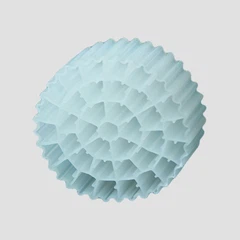
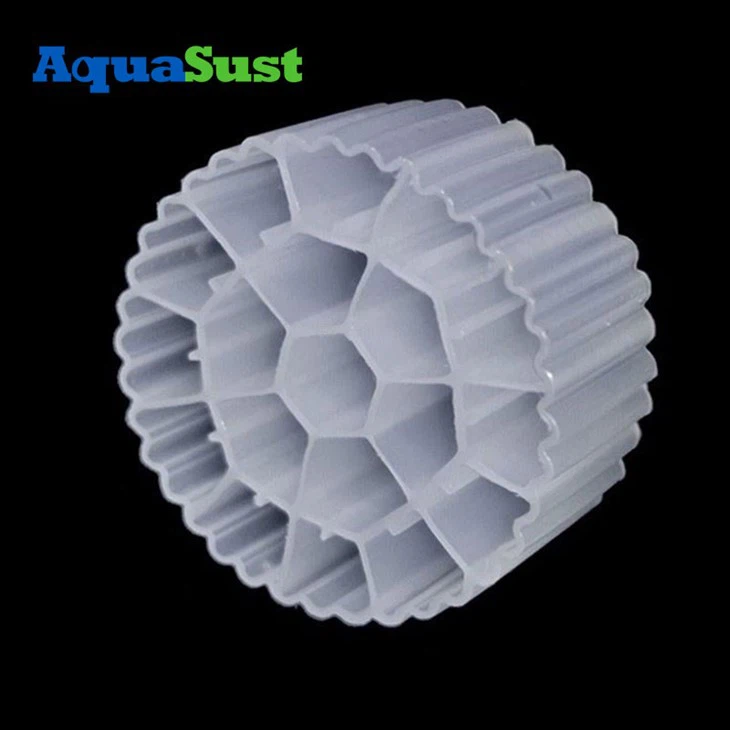
The MBBR process operates on the fundamental principles of biofilm technology. By dosing a specific quantity of engineered suspended carriers into the bioreactor, the system dramatically increases the active biomass concentrations and biological diversity within the tank, thereby optimizing overall treatment performance.
Because the density of the carrier material is closely calibrated to match that of water, the carriers achieve a state of complete fluidization and mixing throughout the wastewater matrix during aeration. This creates a dynamic three-phase environment consisting of gas, liquid, and solid components. The continuous collisions and shearing actions of the carriers within the fluid stream cut large air bubbles into micro-bubbles, which significantly increases the mass transfer interface and oxygen utilization rates.
Furthermore, each biological carrier establishes distinct specialized micro-ecosystems across its internal and external surfaces: anaerobic or facultative bacteria thrive sheltered within the interior channels, while aerobic microorganisms proliferate on the outer surfaces. Consequently, each individual carrier functions as a microscopic bioreactor, enabling simultaneous nitrification and denitrification (SND) within a single tank and vastly boosting overall nitrogen removal performance.
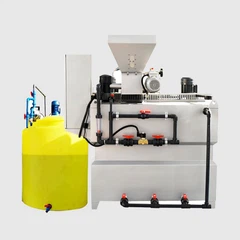
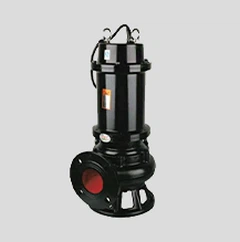
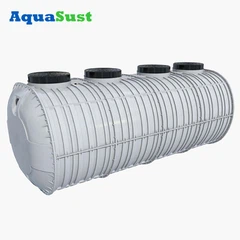
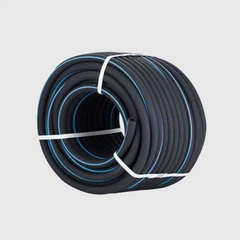
AquaSust Mbbr Products


2. Core Principles and Key Advantages of MBBR
Process Mechanisms
The MBBR process seamlessly blends the operational flexibility and high-rate performance of traditional activated sludge with the robust shock-resistance, extended sludge age (SRT), and low residual sludge production characteristic of fixed-film bio-contact oxidation systems. Relying on the hydrodynamic lift generated by the bottom aeration grid or mechanical mixers, the carriers are maintained in a continuous fluid state. This utilizes the entire available volume of the bioreactor, allowing the co-existing suspended-growth activated sludge and attached-growth biofilm phases to complement one another's structural limitations. Unlike traditional fixed packings, these fluid media are frequently referred to as 'mobile biofilms' due to their unrestricted, highly repetitive contact with the incoming wastewater stream.
Key Technical Advantages
- Optimized Carrier Characteristics: The carriers are engineered from high-density polyethylene (HDPE), polypropylene (PP), modified polymeric composites, or polyurethane open-cell foams. With a specific gravity delicately balanced near 1.0, these structural configurations (primarily cylindrical or spherical) facilitate rapid biological colonization ( biofilm 'hanging' ), prevent matrix clumping or hydraulic short-circuiting, and ensure natural, continuous biofilm shedding.
- Superior Nitrogen Removal Capability: By building stable co-existing aerobic, anoxic, and anaerobic zones layered inside the topography of the media, full nitrification and denitrification pathways proceed concurrently within a single hydraulic boundary, yielding excellent total nitrogen (TN) and ammonia-nitrogen (NH3-N) removal profiles.
- Highly Efficient Organic Load Removal: The total active biomass concentration is extraordinarily high-typically 5 to 10 times greater than that maintained in traditional activated sludge tanks, reaching operational densities of 30 to 40 g/L. This significantly upgrades volumetric organic processing rates and provides exceptional shock-loading resilience against hydraulic or toxic fluctuations.
- Simplified Operations and Maintenance (O&M): The biological tank eliminates the requirement for complex submerged fixed structural packing supports or retention grids. This provides open, unobstructed access to the bottom-mounted aeration grids and media, saving capital expenditures (CAPEX), minimizing operational footprints, and simplifying long-term engineering maintenance.
3. Engineering Limitations and Design Mitigations
- Risk of Localized Media Accumulation: Because fluidization relies completely on bottom air and liquid velocity vectors, real-world engineering installations can occasionally experience localized packing piling or dead zones. To mitigate this risk, the geometric layout of the aeration piping and the internal baffling of the bioreactor must be precisely optimized. Hydraulic studies show that an aspect ratio (length-to-depth) of approximately 0.5, combined with an individual reactor basin length restricted to 3 meters or less, optimizes complete fluidization. Engineering designs should rely on hydraulic modeling and empirical testing to refine tank structures, lower parasitic blower energy consumption, and maximize economic returns.
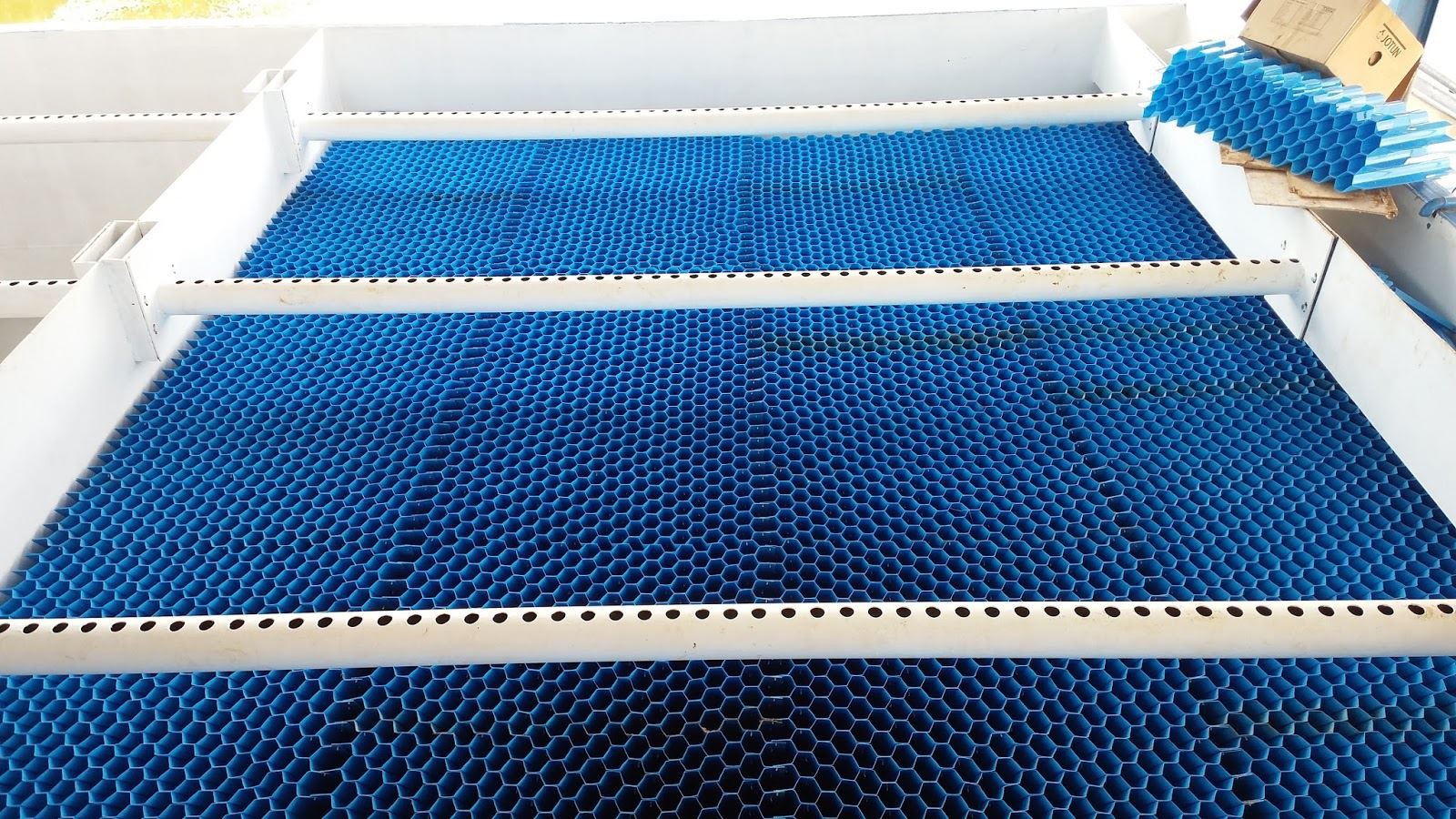
- Effluent Screen Blockage: Perforated plates, wedge-wire sieves, or retention bars are mandatory at the effluent discharge boundary to prevent carrier washout. However, these boundary systems are susceptible to bio-fouling and debris blinding. Engineering mitigations include installing removable, track-mounted retention assemblies for easy surface maintenance, or integrating automated air-sparge backwash headers to continuously clear the screen surface via cyclic air scouring.
4. Conclusion
By capturing the strengths of both suspended and attached growth paradigms while eliminating their primary failure modes, the MBBR process has established itself as a cornerstone biological technology for modern wastewater purification. It remains highly recommended for intensive upgrading projects, high-load industrial treatments, and decentralized systems facing major water quality variations.
5. Aquasust MBBR Integrated Engineering Solutions
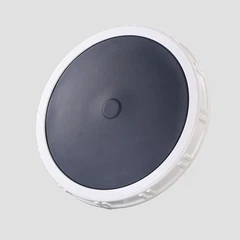
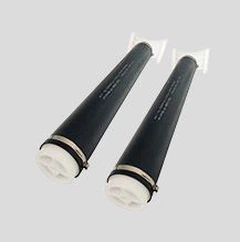
As a globally recognized, high-end original equipment manufacturer specializing in comprehensive water treatment systems and advanced aeration technologies, Aquasust delivers turnkey, fully integrated MBBR system solutions. Our core offerings encompass high-performance virgin HDPE biomedia, advanced retrievable or fixed fine/coarse-pore aeration grids, and customized effluent retention screens designed to meet project-specific requirements. Our systems are widely trusted across municipal wastewater treatment plants, complex chemical/industrial effluent processing facilities, and high-density recirculating aquaculture systems (RAS).
To request a comprehensive technical package, customized hydrodynamic engineering simulation, or official product selection support, please contact our engineering team:
• Website: https://www.chinambbr.com
• Email: info@aquasust.com
• Corporate Inquiry: Available via website official inquiry form.
Aquasust is dedicated to driving technological excellence in water purification-providing highly efficient, stable, and sustainable treatment solutions to build a cleaner global water environment.