







Overview of MBBR Process
The Moving Bed Biofilm Reactor (MBBR) process is based on the principle of biofilm technology. By adding a specific quantity of suspended carriers into the reactor, it enhances the biomass and microbial diversity within the system, thereby improving overall treatment efficiency.
Since the density of the media (carriers) is close to that of water, complete mixing is achieved under aeration conditions, creating a growth environment where gas, liquid, and solid phases coexist. The continuous collision and shearing of the carriers in the water effectively refine air bubbles, improving oxygen mass transfer and utilization efficiency.
Furthermore, distinct micro-environments are formed inside and outside the carriers: the interior is dominated by anaerobic or facultative microorganisms, while the exterior hosts aerobic microorganisms. This allows for simultaneous nitrification and denitrification (SND) on a single carrier, significantly enhancing pollutant removal.

II. Process Principles and Characteristics
1. Process Principles
The MBBR process introduces suspended media into the reactor to allow activated sludge (suspended growth) and biofilm (attached growth) to coexist, leveraging the advantages of both biological treatment mechanisms.
Under the combined action of aeration and hydrodynamics, the media remains in a fluidized state, forming a "moving biofilm." This structure fully utilizes the reactor space, increases biological reaction efficiency, and enhances the system's resilience to shocks loads.
2. Process Advantages
Compared to traditional Activated Sludge Process (ASP) and fixed-growth biofilm processes, MBBR offers the following benefits:
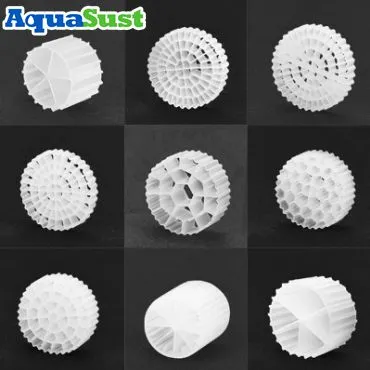
- Superior Media Characteristics: Usually made of PE, PP, or modified polymers, the media features high bio-affinity, resistance to clogging, and excellent sloughing performance.
- Enhanced Nitrogen Removal: The formation of aerobic, anoxic, and anaerobic micro-zones enables simultaneous nitrification and denitrification.
- High Organic Removal Efficiency: The Mixed Liquor Suspended Solids (MLSS) equivalent concentration can reach 5–10 times that of traditional ASP (up to 30–40 g/L), significantly boosting organic loading rate (OLR) capacity.
- Ease of Operation and Maintenance: No need for fixed support structures, simplifying the system and reducing the footprint and investment costs.


3. Process Disadvantages
- Fluidization Control: Requires precise aeration and reactor design (e.g., length-to-depth ratio of ~0.5) to prevent dead zones or media accumulation.
- Sieve Clogging: Outlet retention screens used to prevent media loss are prone to clogging, requiring air scouring or mechanical cleaning.

III.Evaluation of MBBR Media Performance
1. Biofilm Attachment Performance
The core indicator of media performance is the attachment capacity, expressed as:
Total Attached Biomass = Effective Protected Surface Area times *Attachment per Unit Area
2. Performance Indicators
(1) Surface Properties: High surface roughness, positive zeta potential (to attract negatively charged bacteria), and high hydrophilicity facilitate rapid biofilm colonization.
(2) Hydraulic Characteristics: High porosity ensures efficient mass transfer of nutrients and oxygen.
(3) Fluidization Performance: Specific gravity is typically controlled between 0.97 and 1.03 to ensure fluidization with minimal energy consumption.
3. Criteria for Biofilm Maturity
(1) Macroscopic Observation:
Uniform biofilm coverage
Dense inner layer with a loose outer layer
Darkening of the media color.
(2) Microscopic Observation:
Diverse microbial populations;
Dominance of sessile ciliates (e.g., Vorticella, Epistylis);
Presence of rotifers (metazoa) indicates a mature biofilm.


IV. Rapid Start-up and Operation
1. Media Loading Phase
Load media incrementally to prevent accumulation.
Initial stage: Use intermittent aeration (reduced intensity at night) to promote initial attachment.
Control Dissolved Oxygen (DO) at 1.5–2.0 mg/L.
Standard water quality targets are typically met within approximately 7 days.
2. Biofilm Cultivation Phase
(1) Static Cultivation: Alternate between aeration and stagnation to maximize contact time. Maintain a nutrient ratio of C:N:P = 100:5:1. Initial biofilm typically forms in 4–5 days.
(2) Dynamic Cultivation: Transition to continuous flow with DO at 2–4 mg/L. Mature biofilm (indicated by metazoa) is usually achieved within 15–20 days.

3. Biofilm Acclimatization Phase
Control parameters (DO 2–3 mg/L, Hydraulic Retention Time (HRT) or aeration time ≥ 5h) to select for functional populations such as nitrifying bacteria and phosphorus-accumulating organisms (PAOs).
The commissioning is complete when the biofilm thickness reaches 0.2–0.5 mm and effluent parameters (BOD₅,COD,SS) consistently meet discharge standards.
About Us
Aquasust specializing in aeration systems ,MBBR Media , Tube Settlers, Sludge Dewater Equipments, MBR Membrane and other related equipment. Integrating product research and development, manufacturing, and technical services, AquaSust serves clients across the globe, including in South Korea, the United States, Germany, and Argentina.
If you are interested in our products or have other questions to inquire about, please feel free to contact us at any time!