








MBBR System - Efficient Wastewater Treatment
Technology for Industrial & Municipal Use
Concise definition: A moving bed biofilm reactor (MBBR) is a wastewater treatment technology that combines the advantages of both biofilm and activated sludge processes. It utilizes aeration and water flow within the aeration tank to keep the MBBR media in a fluidized state, thereby forming both suspended activated sludge and attached biofilm.

Core advantages:
 High processing capacity: The carrier has a large specific surface area, and the microbial concentration is 3-5 times that of traditional processes.
 Strong shock resistance: The biofilm structure is stable and adapts to fluctuations in water quality and flow rate.
 Small footprint: High volumetric load, saving more than 50% of land area.
 Low operating costs: No sludge return is required, reducing energy consumption by 30%-40%.
 Easy maintenance: No clogging risk, and the carrier has a service life of over 10 years.
MBBR System Working Principle
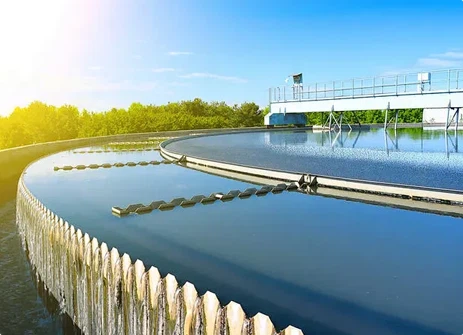
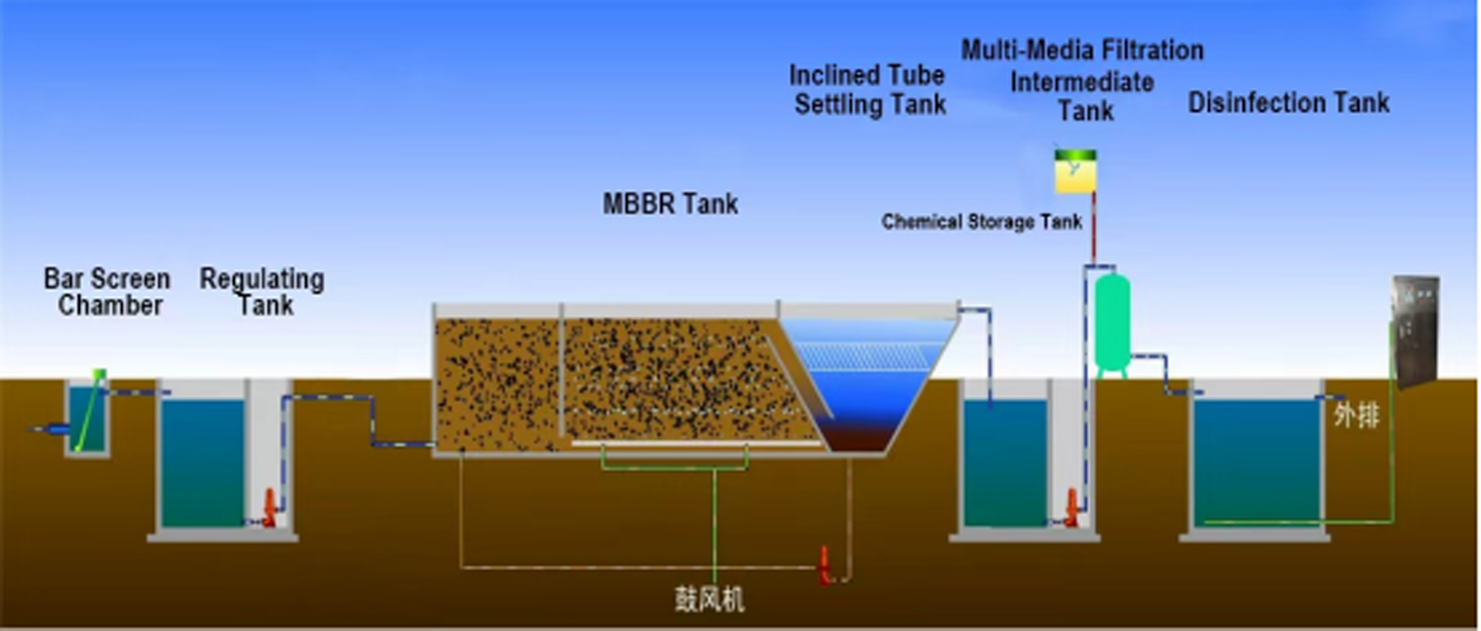
The working principle of a moving bed biofilm reactor (MBBR) involves introducing MBBR biological fillers with a specific gravity similar to water into the reaction tank. These MBBR biological fillers serve as carriers for microbial attachment and growth, forming a biofilm on their surface and even within their structure. Through aeration, mechanical stirring, and water flow, the MBBR biological fillers, wastewater, and sludge are brought into full contact, maintaining the fillers in a suspended state. This allows for the simultaneous action of the biofilm attached to the MBBR fillers and the activated sludge in the reaction tank, improving the contact and mass transfer efficiency between the biofilm and oxygen, enhancing the treatment capacity and effectiveness of the reaction tank, and increasing the system's resistance to shock loads (including changes in toxic compound concentrations), ultimately achieving the goal of wastewater purification.
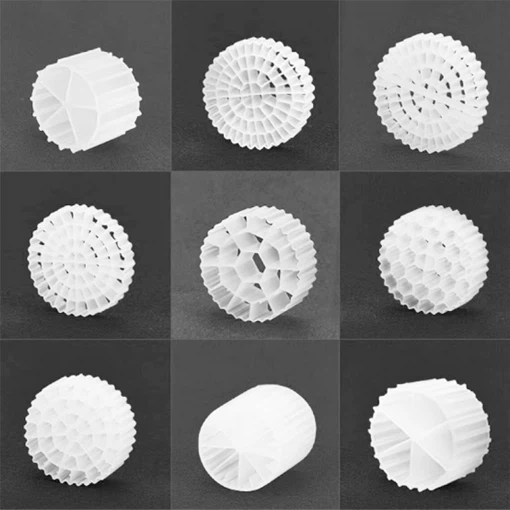
MBBR biological filler
The MBBR system consists of a reactor and floating MBBR media. These MBBR media are typically lightweight materials with a high specific surface area, allowing them to float freely in the reactor and provide a surface for microbial attachment. The high specific surface area and special design of the media enable more microorganisms to attach to their surface, forming a biofilm.
Aquasust MBBR Media Specification
|
Mbbr Media(Type) |
Diameter * Height(mm) |
Surface Area(m² / m³) |
Inside Void Size(mm) |
Number of units per m³ |
|
AS-MBBR 04 |
11 * 7 |
>900 |
5-6 |
940K |
|
AS-MBBR 05 |
11 * 7 |
>1000 |
5-6 |
980K |
|
AS-MBBR 06 |
16*10 |
>800 |
7-8 |
260K |
|
AS-MBBR 19 |
25 * 12 |
>650 |
7-8 |
118K |
|
AS-MBBR 37 |
25 * 12 |
>800 |
5-6 |
118K |
|
AS-MBBR 38 |
25 * 10 |
>800 |
5-6 |
118K |
|
AS-MBBR64 |
25*4 |
>1200 |
Unique |
21K |
|
AS-MBBR 78 |
25*4 |
>1600 |
Unique |
210K |
|
AS-MBBR 92 |
25*4 |
>1700 |
Unique |
190K |
Applications
Municipal wastewater treatment:
Application Background:
Municipal wastewater typically contains organic matter, ammonia nitrogen, and other pollutants, requiring efficient and stable treatment processes to meet discharge standards.
Advantages of the MBBR Process:
Efficient removal of organic matter, ammonia nitrogen, and other pollutants, improving effluent water quality.
Small footprint, reducing land acquisition costs.
Automated operation reduces manual intervention and simplifies operation and maintenance procedures.
Practical Applications:
The MBBR process has been widely applied in wastewater treatment plants in many countries around the world, achieving significant improvements in effluent water quality.
A series of solutions for applying the MBBR process to municipal wastewater treatment have been developed to address the challenges of complex and diverse water quality issues.
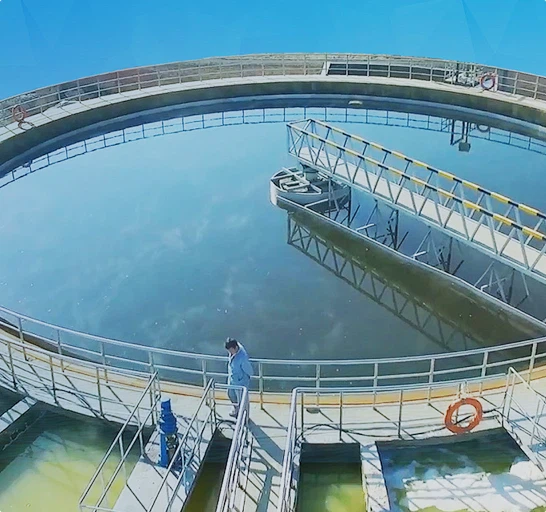
Aquaculture wastewater treatment
Application Background:
Aquaculture wastewater contains organic matter, nitrogen, phosphorus, and other pollutants. Direct discharge of this wastewater can cause environmental pollution.
Aquaculture wastewater treatment requires efficient and stable processes to ensure water quality safety.
Advantages of MBBR Process:
Efficient removal of organic matter, nitrogen, phosphorus, and other pollutants, improving effluent water quality.
MBBR biological fillers have a specific gravity close to that of water, making them easy to colonize with microorganisms, preventing clumping and clogging, and facilitating biofilm detachment.
Flexible application, small footprint, suitable for aquaculture farms of various sizes.
Practical Application:
The MBBR process has been applied in multiple aquaculture wastewater treatment projects, achieving compliant discharge of wastewater.
Through optimized filler selection and process parameters, the MBBR process has demonstrated excellent treatment effects and economic benefits in aquaculture wastewater treatment.
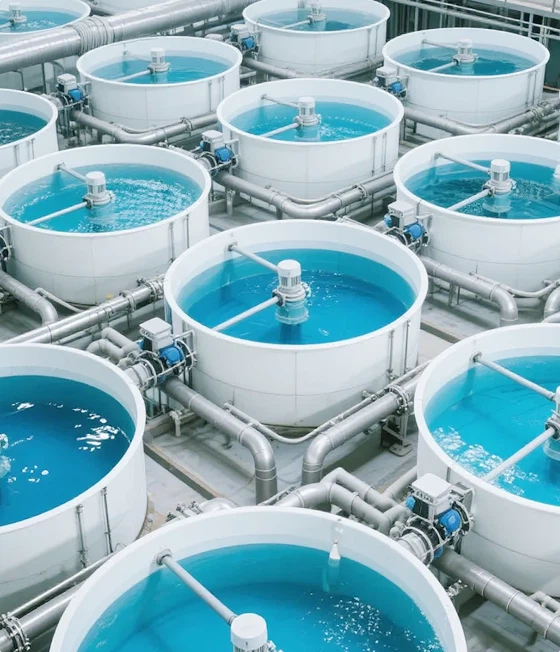
MBBR vs Traditional Methods
| Project | MBBR System | Traditional activated sludge process |
| Land area | Small (50% space saving) | Large |
| Sludge production | Low (40% reduction in footprint) | High |
| Impact resistance | Robust | Weak |
| Operating energy consumption | Low energy consumption (30-40% energy saving) | High |
| Maintenance difficulty | Low maintenance (no clogging) | High (requires sludge recirculation and aeration maintenance) |
FAQs
Q1: Do the carriers (media) of the MBBR system need regular replacement?
A1: No replacement is needed. Aquasust's MBBR bio-media is made of new high-quality materials, with a service life of ≥10 years. It features ultra-high stability and a long service cycle, requiring only regular inspection to ensure normal operation.
Q2: Is the MBBR system suitable for treating high-concentration organic wastewater?
A2: Yes, it is suitable. By adjusting the filling rate of MBBR bio-media and Hydraulic Retention Time (HRT), the MBBR system can effectively treat high-concentration organic wastewater, even with complex pollutant compositions.
Q3: How much higher is the investment cost of the MBBR system compared to traditional processes?
A3: The initial investment of the MBBR system is 10%-15% higher than that of traditional processes. However, its operating cost is 30% lower, allowing the cost difference to be recovered within 2-3 years through long-term energy and maintenance savings.

If you have any questions, please feel much free to contact us.
