







A Technical Guide for Wastewater Treatment Professionals

1. Introduction to MBBR Technology
Moving Bed Biofilm Reactor (MBBR) technology has become one of the most widely adopted biological wastewater treatment processes worldwide. Its advantages - including high volumetric treatment capacity, tolerance to shock loading, low footprint requirements, and minimal sludge production - make it suitable for municipal sewage treatment, industrial effluent management, and aquaculture recirculating water systems.The fundamental performance of any MBBR system depends on two critical factors: the quality of the plastic media (carrier) used, and the maturity of the biofilm that colonizes it. This article provides a systematic technical framework for evaluating MBBR media performance and determining biofilm maturation status - essential knowledge for engineers, operators, and procurement specialists in the water and wastewater sector.
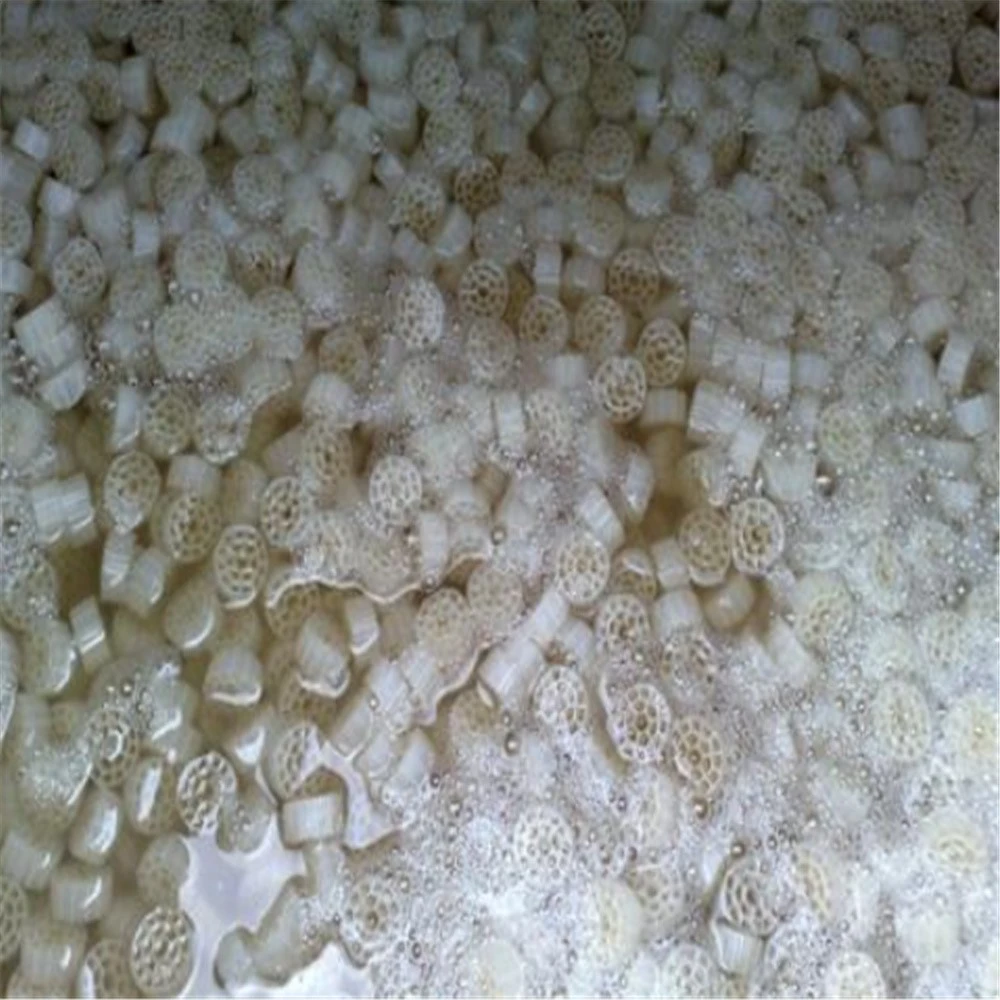
2. Biofilm Attachment Capacity of MBBR Media
Biofilm attachment capacity is the primary performance indicator for any MBBR carrier. It governs how effectively microorganisms colonize and remain stable on the media surface throughout the treatment cycle. The biomass attached to the media can be quantified using the following relationship:
Total Biofilm Biomass = Protected Surface Area × Biomass per Unit Surface Area
Where:
• Protected Surface Area: The effective surface area shielded from mechanical shear inside the reactor - directly related to the media's geometric design and hydrodynamic operating conditions.
• Biomass per Unit Surface Area: The density of microbial growth per cm² of media surface - primarily governed by the material properties and structural characteristics of the carrier itself.
A media with superior attachment capacity supports denser and more stable microbial communities, resulting in higher organic removal efficiency, better nitrification performance, and greater system resilience.
3. Key Performance Parameters of MBBR Media
Selecting the right MBBR media requires a comprehensive evaluation across three critical performance dimensions: surface properties, hydraulic characteristics, and fluidization behavior.
3.1 Surface Properties
The physical and chemical characteristics of the media surface directly determine the speed and stability of biofilm formation.
1. Surface Roughness: A rougher surface texture provides more nucleation sites for microbial attachment, accelerating initial biofilm seeding. Standard MBBR media typically targets a surface roughness (Ra) of 1.5–4.0 μm to optimize colonization without impeding media movement.
2. Surface Charge (Zeta Potential): Most microorganisms carry a net negative surface charge at neutral pH. Media materials with a positively charged or near-neutral surface facilitate electrostatic attraction of microbial cells, enhancing initial adhesion - a critical advantage during system start-up.
3. Hydrophilicity: Microorganisms are hydrophilic in nature. Media materials with high hydrophilicity (water contact angle < 40°) promote stable biofilm formation and prevent biofilm sloughing under varying hydraulic conditions.
3.2 Hydraulic Performance
The internal geometry of the media determines how effectively water, nutrients, and dissolved oxygen reach the biofilm - directly impacting treatment efficiency.
1. Void Fraction / Porosity: A higher internal void ratio (typically 85–95%) allows greater microbial colonization volume and promotes efficient mass transfer of substrates and dissolved oxygen to the biofilm layer.
2. Geometry and Dimensions: Media shape influences the distribution of liquid and gas flow within the reactor. Common geometries include cylindrical, wheel, and chip designs - each offering different trade-offs between specific surface area (m²/m³), pressure drop, and biofilm uniformity.
3.3 Fluidization Performance
Proper fluidization is fundamental to MBBR operation. The media must remain in continuous, gentle movement throughout the reactor to ensure uniform biofilm development and effective substrate contact.
1. Density Requirement: Standard MBBR media is engineered to a bulk density of 0.95–1.05 g/cm³ (most commonly 0.97–1.03 g/cm³). Within this range, the media achieves reliable fluidization at low aeration rates or moderate mixing energy, minimizing operational energy consumption.
2. Fill Ratio: The recommended media fill ratio in aerobic MBBR reactors is 30–70% of the net reactor volume. Higher fill ratios increase treatment capacity but require sufficient aeration intensity to maintain adequate mixing and prevent media stagnation zones.
3.4 Media Performance Comparison Summary
Key technical parameters for high-quality MBBR plastic media:
| Parameter | Recommended Value / Range | Significance |
| Specific Surface Area | 500–1200 m²/m³ | Higher SSA = greater biofilm capacity |
| Bulk Density | 0.97–1.03 g/cm³ | Stable fluidization, low energy cost |
| Void Fraction | ≥85% | Efficient O₂ and nutrient transfer |
| Surface Roughness (Ra) | 1.5–4.0 μm | Accelerates biofilm colonization |
| Fill Ratio (Aerobic) | 30–70% of reactor volume | Balances capacity and mixing energy |
| Material (HDPE/PP) | Virgin-grade, UV-stabilized | 15+ year service life in typical conditions |
4. Methods for Assessing MBBR Biofilm Maturity
Determining when the biofilm has reached full maturity is a critical operational milestone. A mature biofilm is characterized by stable thickness, diverse microbial community structure, and consistent pollutant removal performance. Two complementary assessment methods are used in practice:
4.1 Visual (Macroscopic) Inspection
During routine operations, operators can perform initial biofilm maturity checks through direct visual observation of the media. Key indicators include:
1. Uniform Coverage: Biofilm is evenly distributed across all media surfaces, with no significant bare areas remaining. Coverage >80% of the protected surface area is generally considered the maturity threshold.
2. Layered Structure: A distinct bilayer structure is visible - a dense, compact inner layer firmly adhered to the media surface, and a more open, porous outer layer that facilitates substrate diffusion and gas exchange.
3. Color Transition: The media color deepens progressively from light tan/yellow (early colonization) through brown to dark grey-brown, reflecting increasing biomass density and the presence of diverse anaerobic and aerobic microbial layers within the biofilm.
4. Film Thickness & Texture: A mature biofilm typically reaches 0.5–3 mm in thickness, with a gel-like, slightly slippery texture. Excessive thickness (>5 mm) may indicate insufficient shear forces and potential oxygen transfer limitations in the inner biofilm layers.
4.2 Microscopic Examination
Microscopic analysis provides definitive confirmation of biofilm maturity by revealing the community composition and structural complexity of the microbial ecosystem. A mature MBBR biofilm under light microscopy typically exhibits the following characteristics:
1. Dense, Layered Biofilm Architecture: The biofilm shows clear stratification - a compact basal layer dominated by rod-shaped bacteria (Proteobacteria, Bacteroidetes) surrounded by a polysaccharide matrix (EPS), and a more open outer layer.
2. High Microbial Diversity: A rich variety of microbial morphologies is observed, including cocci, rods, spirochetes, and filamentous bacteria - indicative of a complex and stable food web essential for complete organic degradation and nutrient removal.
3. Abundance of Sessile Ciliates: High populations of stalked protozoa - particularly Vorticella (bell animalcule) and Epistylis (colonial peritrichs) - are a reliable indicator of stable, mature biofilm conditions. These organisms graze on free-floating bacteria and fine suspended solids, improving effluent clarity.
4. Presence of Higher Predators: The occasional appearance of rotifers (Rotifera) and free-swimming ciliates (e.g., Paramecium) signals the establishment of a complete trophic structure - a key characteristic of a biologically mature and stable MBBR system.
⚠ Operator Note: Sudden disappearance of protozoa or a shift toward predominantly flagellated organisms may indicate system stress - check for toxic influent, dissolved oxygen deficiency, or pH excursions.
5. Conclusion
MBBR media performance is a multidimensional parameter encompassing surface chemistry, internal geometry, hydraulic characteristics, and fluidization behavior. Each factor contributes directly to the speed of biofilm formation, the stability of the microbial community, and the long-term treatment efficiency of the system.In practical engineering applications, specifying media with high specific surface area, appropriate bulk density, superior surface hydrophilicity, and robust structural integrity is fundamental to achieving reliable and cost-effective biological wastewater treatment - whether for municipal sewage, industrial effluent, or aquaculture recirculating systems.Regular monitoring of biofilm maturity - through both visual inspection and microscopic examination - enables operators to detect performance anomalies early, optimize aeration and mixing strategies, and maintain consistent effluent quality across varying loading conditions.
6. MBBR Media Solutions from chinambbr.com
chinambbr.com is a specialized supplier of high-performance MBBR plastic media for biological wastewater treatment. Our product range covers aerobic MBBR carriers, anoxic MBBR media, and IFAS (Integrated Fixed-Film Activated Sludge) carriers - designed to meet the diverse technical requirements of municipal, industrial, and aquaculture treatment systems.Our MBBR media products deliver:
• High specific surface area (up to 1200 m²/m³) for rapid biofilm colonization and maximum treatment capacity
• Virgin-grade HDPE / PP material with superior chemical resistance, UV stability, and 15+ year service life
• Optimized fluidization geometry for low aeration energy consumption and uniform media distribution
• Custom configurations available for retrofit projects, capacity expansion, and specialized industrial effluent applications


Contact Us
For technical specifications, product selection guidance, project quotations, or engineering consultation, please contact our team through the following channels:
• Website: www.chinambbr.com
• Product Range: MBBR Media / Carriers, Sieve Screens, Aeration Systems
• Applications: Municipal Wastewater, Industrial Effluent, Aquaculture RAS, Drinking Water Pre-treatment