







Coagulants, often referred to as flocculants, are essential in wastewater treatment processes. They are used to enhance solid-liquid separation, improving the efficiency of primary sedimentation, flotation, and secondary sedimentation following the activated sludge process. Additionally, coagulants are widely applied in tertiary or advanced wastewater treatment to further purify the water.
What Are Coagulants?
Coagulants are chemical agents designed to remove suspended solids, colloids, and other pollutants from water. Their primary function is to:
- Neutralize electrical charges on particles
- Promote adsorption bridging
- Compress the double layer of particles
These processes lead to the aggregation of small particles into larger flocs, which are then easily removed through sedimentation, flotation, or filtration.
The Coagulation Process in Water Treatment
Typically, coagulation treatment is performed before solid-liquid separation processes and works in conjunction with these separation methods to effectively remove suspended solids and colloidal substances from raw water. The size of these particles ranges from 1nm to 100μm. Coagulation reduces the turbidity and CODCr of the effluent and can be used in:
- Pretreatment processes
- Advanced treatment
- Residual sludge treatment
Additionally, coagulation helps remove:
- Microorganisms
- Pathogens
- Emulsified oils
- Color
- Heavy metals
- Other pollutants

Coagulation Process
Coagulation is also a highly efficient and cost-effective method for phosphorus removal, achieving a removal rate of 90-95%.
Common Types of Coagulants
1. Inorganic Coagulants
Low molecular weight inorganic coagulants include aluminum chloride, aluminum sulfate, ferric sulfate, and ferric chloride. These coagulants have a slow aggregation rate, form small flocs, and are highly corrosive, leading to challenges in water treatment processes. As a result, they are gradually being replaced by inorganic polymer coagulants.
Inorganic polymer coagulants are new types of water treatment agents developed from traditional aluminum and iron salts. They are cost-effective and provide excellent water purification results.
Polymeric aluminum chloride (PAC) is a highly effective coagulant with good coagulation performance, forming large flocs, requiring lower dosages, and providing high efficiency and fast settling. It is suitable for a wide range of water qualities and is primarily used for purifying drinking water and industrial water. It can also remove heavy metals like iron, manganese, chromium, and lead, as well as fluorides and oils, making it suitable for treating various types of industrial wastewater.

2. Organic Coagulants
Natural polymer coagulants: These include starch derivatives and chitosan. These materials are derived from natural resources and are environmentally friendly, mainly functioning through adsorption and bridging.
Synthetic polymer coagulants: Examples include polyacrylamide (PAM), which enhances floc formation through adsorption or charge neutralization. It is suitable for a wide variety of wastewater treatments.

Product Performance:

3. Composite Coagulants
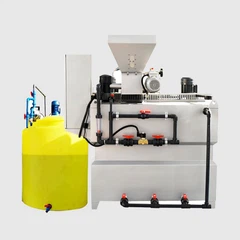
Composite coagulants combine inorganic and organic coagulants, leveraging their respective advantages to enhance coagulation performance while reducing chemical dosages.
The selection and application of these coagulants depend on factors such as the type of wastewater, turbidity Applications of Coagulants in Water Treatment
Coagulants are widely used in:
1. Drinking Water Treatment: To remove turbidity, suspended solids, colloids, and algae before sedimentation or filtration.
2. Municipal and Industrial Wastewater Treatment: For removing suspended solids and colloidal particles between primary and secondary treatments, and sometimes after secondary treatment.
3. Industrial Wastewater Treatment: Commonly used in industries such as paper manufacturing, dyeing, and food processing to remove organic matter, color, and heavy metals.
Conclusion
By selecting the appropriate coagulant and dosing method, water treatment plants can significantly improve treatment efficiency and water quality. Coagulants are a crucial part of modern water and wastewater treatment, providing cost-effective solutions to various pollution challenges.
Keywords: Coagulants, Flocculants, Inorganic, Organic, Wastewater Treatment, Phosphorus Removal