






By: Sunny Wu(Kate@aquasust.com)
Post Date: August 11, 2021
Post Tags: Tailwater treatment of RAS System

The Industrialized Recirculating Aquaculture System (RAS) is a new modern aquaculture production model that integrates engineering, facility, scale, standardization, and information technology established by modern industry. It has advanced aquaculture facilities and equipment, efficient management, and aquaculture. The environment is controllable, the aquaculture production is not restricted by geographical space, the aquaculture production is high, the product quality and safety are guaranteed, and the products can be continuously listed, and the social, economic and ecological benefits are good. It is recognized internationally as the modern aquaculture industry. The direction of development.
In recent years, the state has paid more and more attention to ecological and environmental protection. While developing fisheries, various water pollution problems have also appeared. Therefore, the development of recirculating aquaculture is increasingly being urgently demanded by aquaculture farmers.
In recent years,water aquaculture technology has entered a period of rapid development, and the model has begun to mature. There are more and more abundant options for breeding experience, complete sets of equipment, and water treatment systems. There have been many successful cases of circulating aquaculture. Many aquaculture farmers have brought considerable economic benefits. In a high-density aquaculture environment, not only can one cubic meter of water produce dozens of kilograms of fish, but also sewage discharge can be effectively improved.

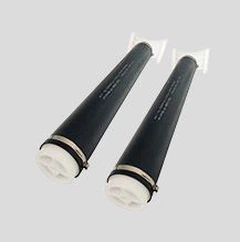
The reuse of aquaculture water is the technical core of the circulating aquaculture system. Its main technical feature is to use aeration, precipitation, filtration and other means to remove the metabolites and bait residues of the aquaculture objects, so that the water quality can be purified to achieve the purpose of reuse. The sedimentation tank and filter in the circulating aquaculture mode (RAS) can only remove visible pollutants. Aeration can promote the growth of aerobic microorganisms in the water, thereby degrading organic pollutants in the water.
The harm of ammonia nitrogen to aquatic organisms mainly refers to the harm of non-ionic ammonia. After non-ionic ammonia enters the aquatic organisms, it will have a significant impact on the enzymatic hydrolysis reaction and membrane stability, showing difficulty breathing, non-feeding, decreased resistance, convulsions, Phenomenon such as coma affects the physiological, biochemical indicators and growth conditions of aquatic organisms, and can cause a large number of deaths of aquatic organisms in severe cases.
In circulating aquaculture, the biological filter is the most critical device for the treatment of tail water, which is equivalent to the heart of the system. In the practice of many projects, the effect of the MBBR moving bed process is particularly obvious, which can effectively remove the ammonia nitrogen in the aquaculture tail water.

The MBBR process tail water treatment process is as follows:
Tail-water-bubble-flotation-biological-denitrification-aerated biological filter-ultraviolet disinfection-discharge
MBBR biological filter currently has two options for all fillers:
1. Polyurethane bio-filler (square shape), the advantage is that the film is fast, the specific surface area is large, the disadvantage is that the life is short, the pores are small, and the biofilm is not easy to fall off after aging, which affects the effect of ammonia nitrogen removal in the later stage.
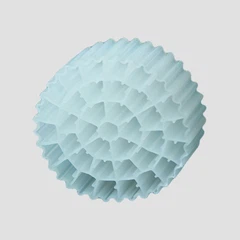
2. High-density polyethylene bio-filler (cylindrical and porous), the advantage is that it has a long life, the biofilm can automatically fall off after aging, and form a new biofilm. The disadvantage is that the film-hanging speed is slower than that of the polyurethane bio-filler, generally about 15- Hang the film in 30 days.
At present, the mainstream international market chooses to use high-density polyethylene bio-filler with a specific surface area greater than 1000m2/m3.
