





Industrial Wastewater Treatment
Industrial wastewater is a broad word encompassing the wastewater produced by humans activity associated with the manufacturing of goods from raw material . A more specific definition would then depend on the type of industry. There are several sources of the industrial wastewater, pulp and paper industry, iron and steel industry, mines and quarries, food industry, complex organic chemical industry and so forth. Wastewater from industries may contain high concentrations of suspended solids, nutrients, and various priority pollutants. In addition to these constituents, refractory organics, like surfactants, phenol and agricultural pesticides can also be present in the water, as well as different concentrations of heavy metals and dissolved inorganics like calcium, sodium, and sulphate. Other industrial wastewater physical attributes like total solids (TS), odours, temperature, colour, and turbidity require treatment before discharge. Further, industrial wastewater can contain pathogenic organisms, for example, slaughterhouse wastewater, or mold and fungi like the wastewater from starch and yeast factories. Industrial wastewater could also be nutrient deficient as in the case of mining wastewater. The focus of this work is food processing wastewater. Food processing wastewater is characterized as high strength wastewater, containing high concentrations of fats, oils, and grease or other organic and inorganic compounds. In specific, this work looks at the treatment of dairy and in particular cheese processing wastewater.
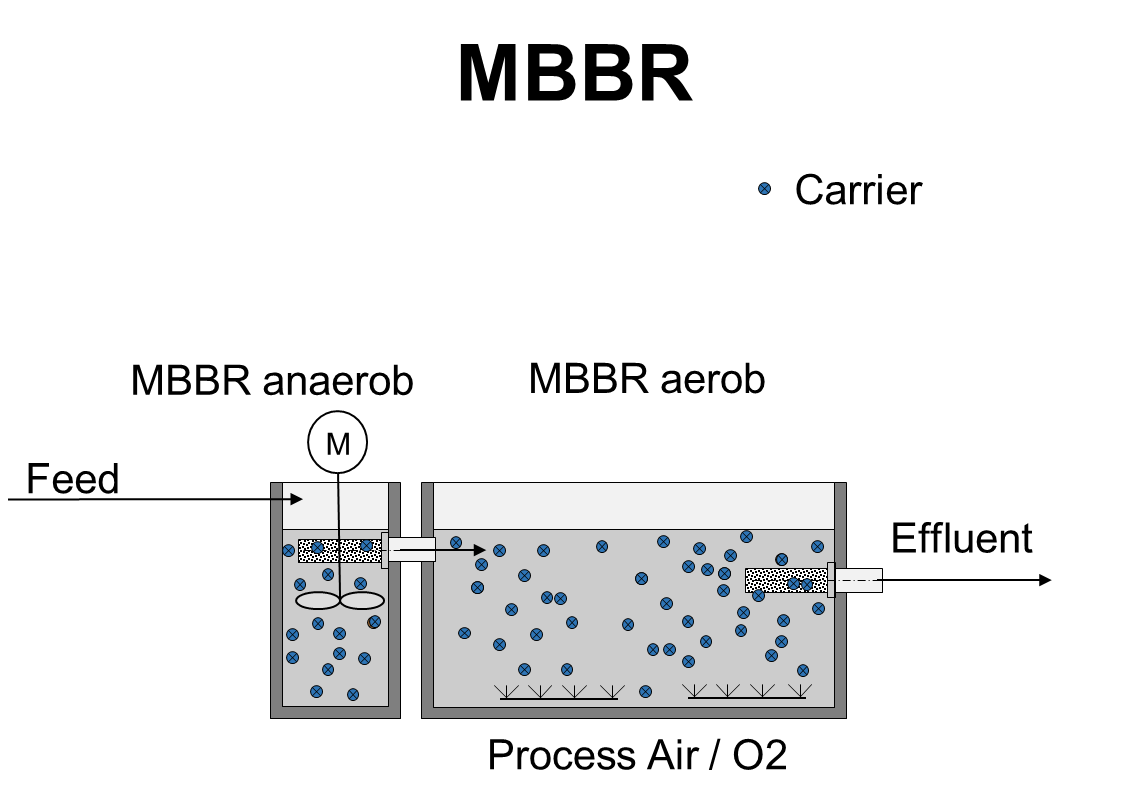
MBBR Wastewater treatment
In food processing wastewater treatment, the primary objective is the removal of organics and nutrients as well as physical attributes like TSS to meet standards for sewage discharge. Achieving the treatment would be done using either a suspended growth system or an attached growth system. A suspended growth system is characterized by free-floating microorganisms in the reactor, while an attached growth system sees the microorganisms attached to an inert packing material within the reactor The following sections introduce the biological removal of carbon, nitrogen and phosphorus from food processing wastewater
More technical support, pls contact : layla@juntaiplastic.com