






With the continuous expansion of the scale of aquaculture and the rapid increase in output, a series of ecological and environmental problems have gradually emerged. The residual bait, debris, fish and shrimp body excreta produced in aquaculture cause aquaculture to produce its own pollution, especially with the development of intensive cultivation methods, the breeding density and the amount of bait greatly increase, the amount of residual bait and fish body excretion The amount of food has also increased correspondingly, and the pollution of aquaculture has become more serious. In marine fish farming, its metabolites are 20%-35% of the bait amount, and the residual bait is 10-40% of the bait amount, which is directly discharged into the water body, thereby reducing the dissolved oxygen in the water, ammonia nitrogen and nitrous acid The increase of salt nitrogen and nitrate nitrogen, the accumulation of a large number of viruses, bacteria and other microorganisms in the water, causes the water body's self-purification ability to decrease, leading to eutrophication of the water body or deterioration of water quality. According to reports, about 50% of ponds in major domestic breeding areas are seriously polluted, 30% of ponds are moderately polluted, and 20% of ponds are lightly polluted. At the same time, the massive discharge of untreated aquaculture water pollutes the coastal waters. The contaminated nearshore water was pumped into or taken into the fish pond, causing secondary self-pollution and again endangering the aquaculture industry.
The aquaculture pollution caused by high-yield aquaculture will exceed the self-purification capacity of the crab pond itself, which will seriously affect the improvement of the production, quality and efficiency of crab ponds in the future.
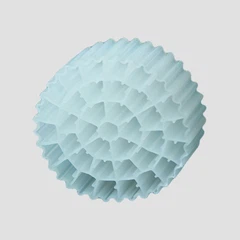
The MBBR method was introduced in the late 1980s and was quickly applied in Europe. It has absorbed the advantages of both the traditional activated sludge method and the biological contact oxidation method to become a new and efficient composite process treatment method. The core part is to directly add suspended fillers with a specific gravity close to water into the aeration tank as the active carrier of microorganisms, relying on the aeration in the aeration tank and the lifting effect of the water flow to be in a fluidized state. When the microorganisms are attached to the carrier, The floating carrier moves freely in the reactor with the swirling and overturning effect of the mixed liquid, so as to achieve the purpose of sewage treatment. As a process that combines the suspended activated sludge method and the attached biofilm method, the MBBR method has the advantages of both: it occupies a small area, and it only needs 20% of the volume of an ordinary oxidation tank under the same load condition ; Microorganisms are attached to the carrier and flow with the water, so there is no need for activated sludge backflow or circulating backwashing; carrier organisms continue to fall off to avoid clogging; high organic load and strong impact load resistance, so the effluent quality is stable; head loss is small, power consumption Low, simple operation, easy operation and management; at the same time suitable for renovation projects.