





How do Tube Settlers work for wastewater treatment?
Comments
1. Why Tube Settlers are The Better Water Treatment Option?
2. What is Tube Settlers and its introduction?
3. The Characteristics of Aquasust Tube Settles
4. The material and of Aquasust Tube Settles
5. How do tube settlers work?
6. What is the inclined tube sedimentation tank?
7. What are the advantages of the inclined tube sedimentation tank?
8. Factors affecting the sedimentation effect of inclined plates and inclined pipes
9. The Design points of Aquasust Tube Settlers
10. What is an advection sedimentation tank?
11. What is a vertical flow sedimentation tank?

You could contact us:
Contact name: Jasmine
Contact email: Kate@aquasust.complastic.com
Whatsapp number: 8618868159881.
1. Why Tube Settlers are The Better Water Treatment Option?

Many people wants know Why Tube Settlers are The Better Water Treatment Option.
Do you find it difficult to obtain an affordable water treatment system?
Do you spend your hard-earned money on repairing water treatment systems from time to time? Have you found a good tube sedimentation medium?
This article is also tailored specifically to solve your problem.
Tubular settler is the most feasible water treatment system. Many problems have been solved in the most professional and friendly way.
2. What is Tube Settlers and its introduction?
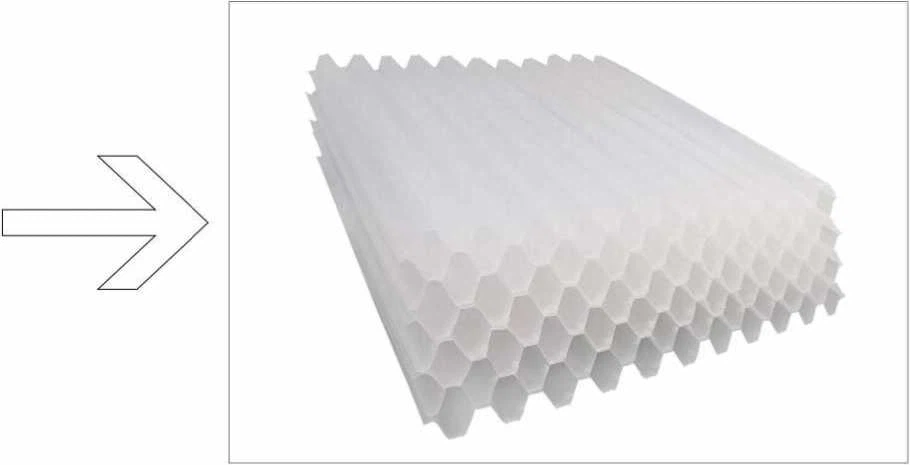
Tube settlers, also called lamella clarifiers, are used to remove solids in the waste water treatment.
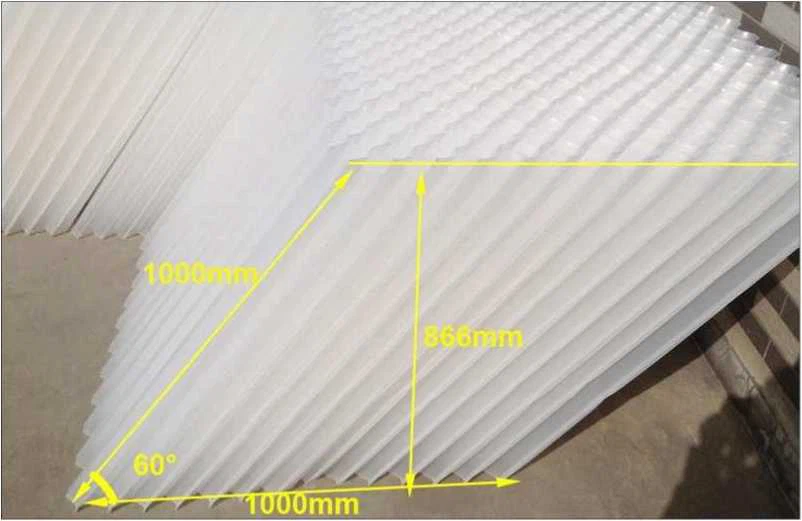
Tube settlers use multiple tubular channels sloped at an angle of 60° and adjacent to each other, which combine to form an increased effective settling area.
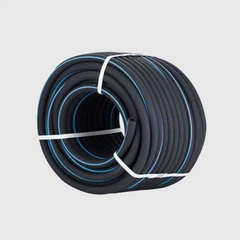
Tube Settler Can be Made into PP and PVC Material PP material Tube Settler is food grade, it can be blue and white colon PVC material can ba blue and black color. Both PP and PVC materials can add UV protection.
3. The of Characteristics Aquasust Tube Settles
1. Large wet circumference and small hydraulic radius.
2. The laminar flow state is good, and the particle settling is not disturbed by flocculation.
3. When the length of the inclined pipe is 1 meter, the effective load is designed at 3-5 tons/m2. The v0 is controlled within the range of 2.5-3.0 mm/sec, and the effluent quality is good.
4. The honeycomb inclined pipe is used at the water intake. When the pipe length is 2.0 to 3.0 meters, it can be safely operated and processed in the high turbidity of 50-100 kg/m3 of silt content.
5. Using inclined tube sedimentation tank, its processing capacity is 3-5 times that of advection sedimentation tank, and 2-3 times of acceleration clarification tank and pulse clarification tank.
You could contact us:
Contact name: Jasmine
Contact email: Kate@aquasust.complastic.com
Whatsapp number: 8618868159881.
4. The material and of Aquasust Tube Settles
The thickness of the sheet can be processed according to customer requirements. The honeycomb inclined tube filling machine is generally used for the precipitation of industrial and domestic water, sewage precipitation, oil separation and tailings concentration treatment, and can also be used for the transformation of old ponds. The honeycomb inclined tube packing is characterized by a large wet cycle and a small hydraulic radius, a good wake state, and the particle settling is not disturbed by turbulence.
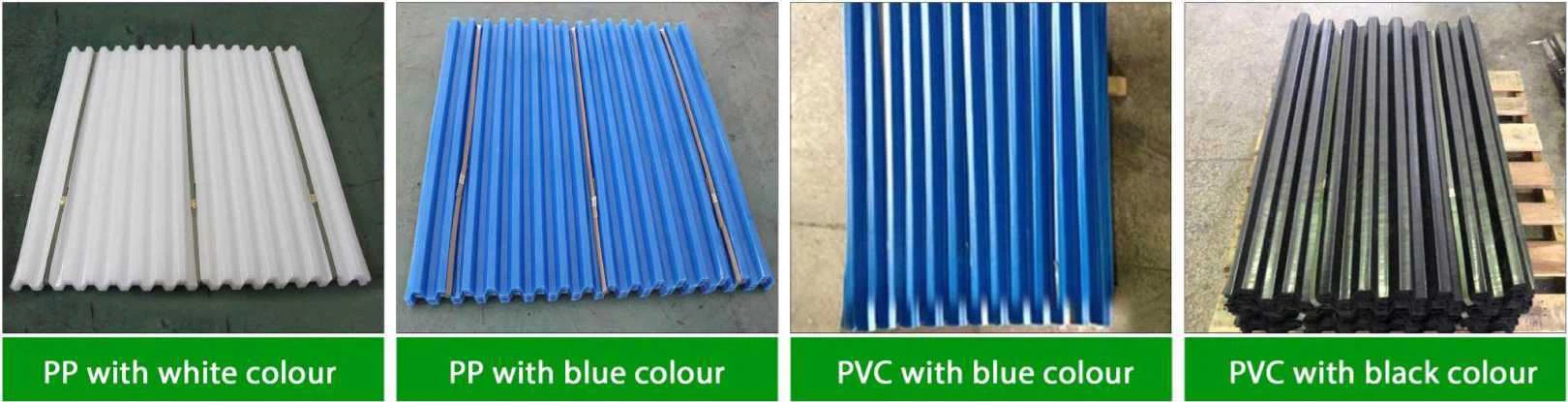
The honeycomb inclined tube filler is mainly polypropylene plastic inclined tube and PVC material inclined tube. The length of the inclined tube is large and the precipitation effect is good. The concentration is large, and it may be a transitional section or disorder. The upper section of this section can clearly see the separation of mud. This period is separation, but the inclined pipe is too long and it is difficult to return to the long inclined pipe, which will increase the cost. ,no significant effect. Therefore, the filling length of the honeycomb inclined tube can be moderate.

|
Size (mm) |
Thickness(mm) |
Quantity (pcs/m2) |
Weight (kgs/m2) |
Specific Surface Area (m2/m3) |
|
(D25 |
0.40 |
62 |
30 |
139 |
|
0.45 |
62 |
35 |
139 |
|
|
035 |
0.40 |
42 |
22 |
109 |
|
0.45 |
42 |
25 |
109 |
|
|
0.50 |
42 |
28 |
109 |
|
|
0.40 |
30 |
16.5-17 |
87 |
|
|
0.45 |
30 |
175-18 |
87 |
|
|
0.50 |
30 |
185-19 |
87 |
|
|
0.60 |
30 |
22 |
37 |
|
|
080 |
0.70 |
20 |
19.5 |
50 |
|
0.80 |
20 |
22 |
50 |
During long-distance transportation, the honeycomb inclined tube packing should be stacked neatly, without weight, so as to avoid deformation, and not subject the product to blows and cross cracks. The precipitation of honeycomb packing should be stored in a clean and smooth warehouse or in the field, and should be protected from direct sunlight and rain. Do not get close to fire and high-temperature objects, nor close to hazardous materials.
5. How does tube settler work?
We are now going to find out how the tubular settler works. The tubular settler consists of adjacently placed tubular channels. These are a combination of being placed at 60 degrees and increasing the effective sedimentation area of the particles. The formation of the particle settling zone is smaller than the settling depth of the conventional clarifier. This makes the flocs easy to settle. In order for the tubular settler to stop fine particles, it must utilize fine flocs that manage to pass through the clarification zone. In this case, it enables the larger particles to reach the bottom of the tank in a better shape. The tube settler now creates a considerable mass and can go down the channel easily.
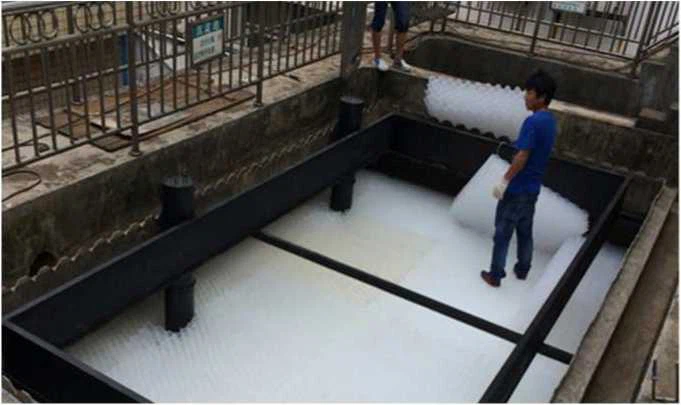
First, they provide a large surface area for particles to settle. This is because they are connected at different angles. Second, they are used to accumulate smaller particles until they form larger particles that can move evenly along this path. The sinker settler is a settler commonly used in rectangular clarification tanks, which increases the surface area of the settled particles. This is achieved by increasing the vertical distance the particles must move before they settle. By using parallel pipes, the pipe settler makes the upward movement of water uniform.

6. What is the inclined tube sedimentation tank?
Inclined tube sedimentation tank refers to a sedimentation tank with an inclined tube in the sedimentation zone. There are two types of assembly: inclined pipe and branch pipe. In the sedimentation zone of the advection or vertical flow sedimentation tank, use inclined parallel pipes or parallel pipes (sometimes may use honeycomb packing) to divide into a series of shallow sedimentation layers, and the treated and settled sediments are in each sedimentation shallow layer Move each other and separate. According to its mutual movement direction, it can be divided into three different separation methods: reverse (different) flow, same flow and reverse flow. Every two parallel inclined plates (or in parallel pipes) is equivalent to a very shallow sedimentation tank.

The honeycomb inclined tube sedimentation tank is a common processing structure for separating suspended solids. The pretreatment used in the biological treatment method is called the primary sedimentation tank. For general urban sewage, the initial sedimentation tank can remove about 30% of BOD5 and 55% of suspended solids. After the biological treatment structure is called the secondary sedimentation tank, it is an integral part of the biological treatment process.

7. What are the advantages of the inclined tube sedimentation tank?
The advantage is:
①Using the principle of laminar flow, improving the processing capacity of the sedimentation tank;
② Shorten the distance of particle sedimentation, thereby shortening the sedimentation time;
③Increase the sedimentation area of the sedimentation tank, thereby improving the treatment efficiency.
The flow rate of this type of sedimentation tank can reach 36m3/(m2.h), which is 7-10 times higher than the processing capacity of the general sedimentation tank. It is a new type of high-efficiency sedimentation equipment. And has been finalized for production practice.
Advantages: high removal rate, short residence time, small footprint

8. Factors affecting the sedimentation effect of inclined plates and inclined pipes
1) The middle part of the inclined plate and the inclined pipe is laminar flow, and the inlet section and outlet section are affected by the inflow and outflow and water, and there is interference;
2) The water flow in the inclined plate and inclined pipe has good stability, which is beneficial to improve the sedimentation effect;
3) Since the sedimentation distance and sedimentation time are very short, sufficient flocculation is required before entering the sedimentation tank;
4) The turbid water density flow has the least impact on the upward flow. The upward flow is suitable for high turbidity water, and the downward flow is suitable for very low turbidity water.
9. The Design points of Aquasust Tube Settlers
1) Applicable water quality: turbidity <1000 degrees
2) Liquid surface load in sedimentation zone: 9.0~11.0m3/m2·h
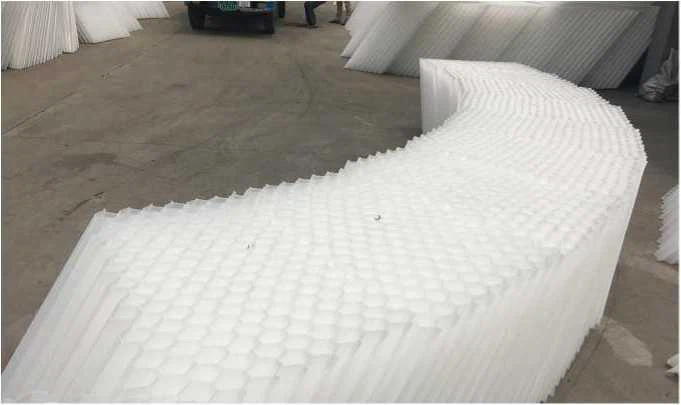
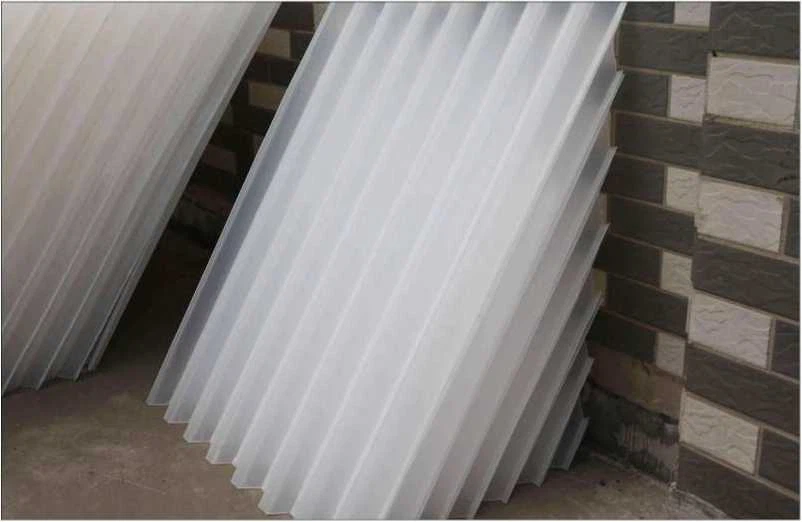
3) Inclined pipe diameter 25~35mm (regular hexagon), oblique length 1.0m, angle of inclination 60o, material: non-toxic polypropylene with a thickness of about 0.4~0.5mm.
4) The height of the clear water area is >1.0m, and the height of the bottom water distribution area is >1.5m. The outlet of the flocculation tank should generally consider rectification measures.
5) A spoiler should be installed at the gap between the pool wall and the inclined plate to prevent water flow from short-circuiting. The edge of the inclined plate should be installed inclined to the water inlet end of the pool.
6) The water inlet method generally adopts perforated wall rectification to distribute water, and the water outlet method generally uses multi-channel water outlet. Several parallel outlet weirs and water collection troughs are added on the pool surface to improve the water quality and increase the water output.
7) The inclined plate (tube) sedimentation tank generally uses gravity to drain mud. Discharge mud at least 1~2 times a day, or discharge mud continuously.
Types of sedimentation tanks-advection sedimentation tank, vertical flow sedimentation tank and radial flow type
10. What is an advection sedimentation tank?
The advection sedimentation tank refers to the water treatment structure in which the flocs can be precipitated and removed during the horizontal flow of the raw water added with the coagulant in the rectangular tank from the inlet to the outlet. The advection sedimentation tank is rectangular in shape. Wastewater flows in from one end of the tank, flows through the tank in a horizontal direction, and flows out from the other end of the tank. A mud bucket is set at the bottom of the inlet of the pool, and the bottom of the pool at other parts has a slope, inclined to the mud bucket.
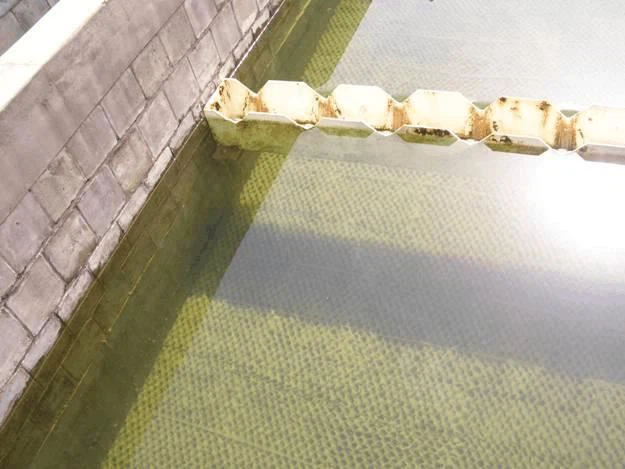
The advection sedimentation tank has a rectangular row. Wastewater flows in from one end of the tank, flows through the tank in a horizontal direction, and flows out from the other end of the tank. A mud bucket is set at the bottom of the inlet of the pool, and the bottom of the pool at other parts has a slope, inclined to the mud bucket. The radial flow sedimentation tanks are mostly circular, and small tanks are sometimes square or polygonal. Advection sedimentation tank is a type of sedimentation tank. The plane of the pool body is rectangular, and the inlet and the outlet are located at the two ends of the pool length. The length-to-width ratio of the pool is not less than 4, the effective water depth is generally not more than 3m, and the sludge at the front of the pool is designed. The advection sedimentation tank has good sedimentation effect and is widely used, but it occupies a large area. Commonly used in sewage treatment plants with a water volume of more than 15,000 cubic meters per day.
The advection sedimentation tank is composed of three parts: inlet, outlet, water flow part and sludge bucket. The plane of the pool body is rectangular, and the inlet and outlet are respectively set at the two ends of the pool. The inlet generally uses submerged inlet holes. Water flows into the pool body from the inlet channel through evenly distributed inlet holes. There are baffles behind the inlet holes to make the water flow. Evenly distributed across the width of the pool; overflow weirs are often used at the outlet to ensure that the settled clarified water can flow into the outlet channel evenly along the width of the pool. A scum trough and baffle are set in front of the weir to intercept the scum on the water surface. The water flow part is the main body of the pool. The width and depth of the pool should ensure that the water flow is evenly distributed along the water cross section of the pool, and flows slowly and stably according to the design flow rate. The sludge bucket is used to accumulate the deposited sludge. It is mostly located below the bottom of the pool at the front of the pool. There is a sludge discharge pipe at the bottom of the bucket to discharge the sludge regularly.
You could contact us:
Contact name: Jasmine
Contact email: Kate@aquasust.complastic.com
Whatsapp number: 8618868159881.
11. What is a vertical flow sedimentation tank?
Vertical flow sedimentation tank, also called vertical sedimentation tank, is a sedimentation tank in which boiling water flows vertically. The plane figure of the pool body is round or square.
The water enters the pool from top to bottom through the inlet pipe located in the center of the pool (the flow velocity in the pipe should be less than 30mm/s), and the umbrella-shaped baffle is set under the pipe to make the wastewater evenly distributed in the pool. Slowly rise along the entire cross-section of the water (for domestic sewage generally 0.5-0.7mm/s, the sedimentation time is 1-1.5h), the suspended matter settles into the conical sedimentation bucket at the bottom of the pool, and the clarified water flows from the periphery of the pool along the periphery The overflow weir flows out.
A baffle and a scum trough are installed in front of the weir to intercept scum to ensure the quality of the effluent. The vertical flow sedimentation tank is equipped with a mud pipe (diameter greater than 200mm) against the wall on one side of the pool. The vertical flow sedimentation tank that regularly discharges the mud by static water pressure has the advantages of small floor space and easy mud discharge. The disadvantage is that the depth is high, the construction is difficult, and the cost is high. high. It is often used in sewage treatment plants with a water volume of less than 20000m3/d.
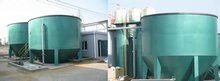
The radial flow sedimentation tanks are mostly circular, and small tanks are sometimes square or polygonal. The inlet of the pool is in the center and the outlet is around. The water flow in the pool is horizontal and radial. The mud bucket is set in the center of the pool, and the bottom of the pool is inclined to the center. The sludge is usually removed by scraping (or suction) machinery.
You could contact us:
Contact name: Jasmine
Contact email: Kate@aquasust.complastic.com
Whatsapp number: 8618868159881.