

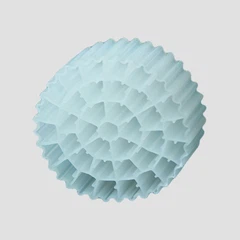






There are many MBBR on the market. After reading this article, you will know how to evaluate the quality.

1. Adhesion of biofilm
The adhesion ability of biofilm:
The most important index to evaluate the quality of fillers
Bio-attachment amount = protected surface area (related to the designed operating state of the filler) × biological attachment amount per unit surface area (related to the performance of the filler)

If you have interest, please contact Doris
Whatsapp: +86 13298186953
Email: doris@juntaiplastic.com
2. Mbbr filter media
The most important indicator for evaluating the amount of biological adhesion of the filler
(1) Filler surface performance
Surface structure:
It is generally considered that the surface roughness is large and the film hanging speed is fast.
Surface potential:
Generally, microorganisms are negatively charged, and the surface of the filler is positively charged, which is suitable for the growth of microorganisms.
Hydrophilicity:
Microbes are hydrophilic particles, and the filler has good hydrophilicity and is suitable for microbial growth and filming.

(2) Hydraulic performance
Porosity: The volume occupied by the bio media, the porosity is high.
Shape and size: Affect the flow state of water and airflow.

(3) Fluidization performance
It is related to the density of the mbbr biofilter. The density of the filler should be 0.97-1.03, and fluidization can be achieved with less aeration or stirring.

3. Judgment of maturity of the hanging film

Visual judgment:
The biofilm is evenly distributed on the surface of the carrier, and the closer it is to the surface of the carrier, the denser it is, otherwise the looser it is.
At the same time, the color of the carrier becomes darker, which indicates that the carrier film has entered the mature stage.
Judgment by microscopy:
The biofilm has a dense structure and diverse microbial species.
The number of sessile ciliates, bollworms, and cladworms is the majority. The appearance of a small number of rotifers and swimming ciliates signifies the maturity of biofilms.
For more information, please visit www.juntaiplastic.net