






By: Kate
Email:kate@aquasust.com
Date: 9th November 2024

What is sludge?
Sludge refers to the sediment, particulate matter and floating matter produced in the sewage treatment process, including solids, suspended matter, colloidal matter contained in the sewage and the sludge separated from the water, collectively known as sludge.
It is formed after separation from wastewater by physical methods and is a viscous substance between liquid and solid, with a concentration of suspended solids of 1% to 10%, and a high content of organic matter in sludge solids, which is easily putrefied and smelly. Sludge is a by-product of wastewater treatment through physical, chemical, physicochemical and biological processes. It is an extremely complex heterogeneous body consisting of organic residues, bacteria, inorganic particles, colloids, etc.
What are the types of sludge?
Classification according to source: Sludge can be broadly classified into three categories.
① Water supply sludge (sludge generated from raw water purification, such as water plants)
② Domestic sewage sludge
③ Industrial wastewater sludge.
According to the composition and nature of sludge: sludge can be divided into organic sludge and inorganic sludge.
①Organic sludge consists mainly of organic matter and is hydrophilic sludge. Domestic sewage sludge or mixed sewage sludge belongs to this category.
②Inorganic sludge consists mainly of inorganic materials, usually called sediment, and is usually hydrophobic sludge. This type of sludge includes sediments from the physical and chemical treatment of feedwater treatment gravel chambers and certain industrial wastewater.
Sludge can be divided into four categories according to the method of treatment of the effluent or the process by which the sludge is separated from the effluent.
① Primary sludge: Sludge generated from primary treatment of sewage;
②Residual activated sludge: residual sludge generated by activated sludge method;
③ Humic sludge: the sedimentation sludge produced by the secondary sedimentation tank of biofilm method;
④ Chemical sludge: sludge from chemically enhanced primary treatment or tertiary treatment.
The sludge can be divided into five categories according to the different stages of sludge production.
① Raw sludge: The general term for the sediment and suspended matter discharged from the primary and secondary sedimentation tanks;
② Thickened sludge: Sludge obtained after thickening of raw sludge;
③Digested sludge: sludge obtained after aerobic and anaerobic decomposition of raw sludge;
④Dewatered sludge: sludge obtained after dewatering treatment;
⑤ Dried sludge: sludge obtained after drying treatment.

How is sludge treated?
Sludge treatment follows four principles: harmlessness, reduction, stabilization, and resourcefulness, and is generally divided into three treatment processes: drying, digestion, and final disposal, firstly, after the original sludge is separated from the sewage in the sedimentation tank, it must be concentrated and dried due to its high water content and large volume, and then the harmful components contained in the sludge are transformed into harmless substances using digestion, while the final disposal includes sanitary landfill, solidification for reuse as construction materials, and final disposal. The final disposal includes sanitary landfill, solidification for reuse as construction material, use as fertilizer, and incineration as fuel.
1,Sludge thickening/dewatering by drying
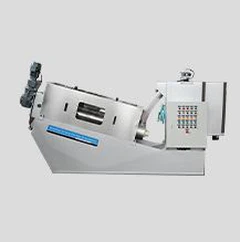
Natural evaporation and mechanical dewatering are two methods, as the name suggests, natural evaporation is to spread out the sludge on land with good permeability or artificial drying beds, which is narrow in scope, has a relatively long natural drying cycle and is easily affected by climate, and it is difficult to find suitable land in large and medium-sized developed cities in China; while mechanical dewatering is to use drying equipment, such as electric hot air belt dryers, pressure/vacuum filters, centrifuges, and belt dewatering machines. filter, centrifuge, belt thickener and other equipment, mechanical dewatering has good applicability, large processing capacity and long duration, and is a common method for large sewage treatment plants.

2,Sludge digestion
The digestion method is divided into aerobic digestion and anaerobic digestion, the former is a long time aeration of the sludge, so that the degradable substances in the sludge are oxidized to CO₂, H₂O, NH₃; the latter is the anaerobic biochemical reaction using parthenogenic bacteria and anaerobic bacteria to decompose the organic matter in the sludge to produce CH CH₄, CO₂, H₂O, H₂S are produced from the organic matter in the sludge, both of which can stabilize the sludge.
3,Final disposal
Sludge has many uses, which means that there are many methods of final disposal, including land improvement and landscaping, agricultural composting, recycling to make construction materials, incineration, and landfill. Of course, it is necessary to meet the corresponding standards when used for the corresponding purposes.
Sludge treatment can be divided into (1) reduction treatment (thickening method, dewatering, etc.) (2) Stabilization (anaerobic digestion, aerobic digestion) (3) Integrated use (biogas utilization from digestion, agricultural use of sludge, etc.). Final disposal of sludge: drying and incineration, land reclamation and sea disposal, construction materials, etc.
Problems of each type of sludge
1.High water content of unwatered sludge, water content of unwatered sludge up to 90%, water content of first dew dewatered sludge up to 80%, high transportation cost and large pile area. Direct landfill will squeeze the storage capacity of landfill. The landfill will be scrapped in advance. Cause problems such as blockage of waste leachate pipeline.
2. Sludge contains many minerals and contains many plant nutrients such as nitrogen and phosphorus, as well as heavy metal ions such as copper, zinc, chromium and mercury and their salts. In land use, if sludge is not applied properly, it can contaminate the land and cause irreversible degradation of arable land, which directly threatens the human food chain. Moreover, these substances can enter surface water or groundwater through surface runoff or precipitation, affecting its water quality, and nitrogen and phosphorus may even lead to eutrophication of water bodies.
3. Due to the high content of organic matter, it has a high calorific value. The calorific value after drying is equal to that of lignite, but it is perishable and emits unpleasant odors, which can affect the quality of the atmosphere.
4.Sludge contains a large number of parasite eggs, microorganisms, pathogens and toxic and hazardous substances such as PCBs, dioxins and radionuclides. If not used or treated directly, it will cause serious secondary pollution and even spread diseases.
5.Sludge density is small, generally distributed in the range of 1.002~1.006g/cm~3, and the particles are also very fine. In the range of 0.02~0.2mm, pipeline transportation is easy, but the dewatering effect is poor, and it is difficult to precipitate solid-liquid separation.