





The Moving Bed Biofilm Reactor (MBBR) process has emerged as a cornerstone biological technology for modern municipal wastewater upgrading and complex industrial effluent treatment worldwide. At the heart of this biological system are suspended biofilm carriers (commonly referred to as MBBR media or packing). The structural integrity, physical configuration, chemical purity, and ecological safety of these plastic carriers directly dictate the active biomass concentration, fluidization dynamics, and reaction kinetics within aeration basins.
However, as global water regulatory frameworks become increasingly stringent and international EPC project tenders enforce sophisticated compliance criteria, global procurement practices have undergone a fundamental paradigm shift. Engineering firms, municipal water authorities, and industrial operators no longer evaluate MBBR media solely on specific surface area and initial quotation. Instead, procurement decisions are heavily anchored in global regulatory compliance, material safety certifications, and audited polymer quality traceability.
In actual international project bidding and customs clearance, non-compliance with European Union directives (CE mark, REACH SVHC, RoHS) or United States Environmental Protection Agency (EPA) standards has repeatedly led to cargo impoundment, project delays, and severe operational liabilities. More critically, substandard media manufactured from unregulated recycled plastics or compounded with excessive inorganic fillers (such as calcium carbonate) frequently causes premature brittleness, microplastic shedding, and leaching of hazardous plasticizers under continuous aeration shear, compromising sensitive nitrifying biological communities and downstream aquatic ecosystems.
This technical guide provides a rigorous engineering breakdown of global MBBR media regulatory standards, focusing on European Union mandates, North American municipal specifications, virgin polymer quality thresholds, and geographic engineering adaptations to guide water professionals and procurement teams.
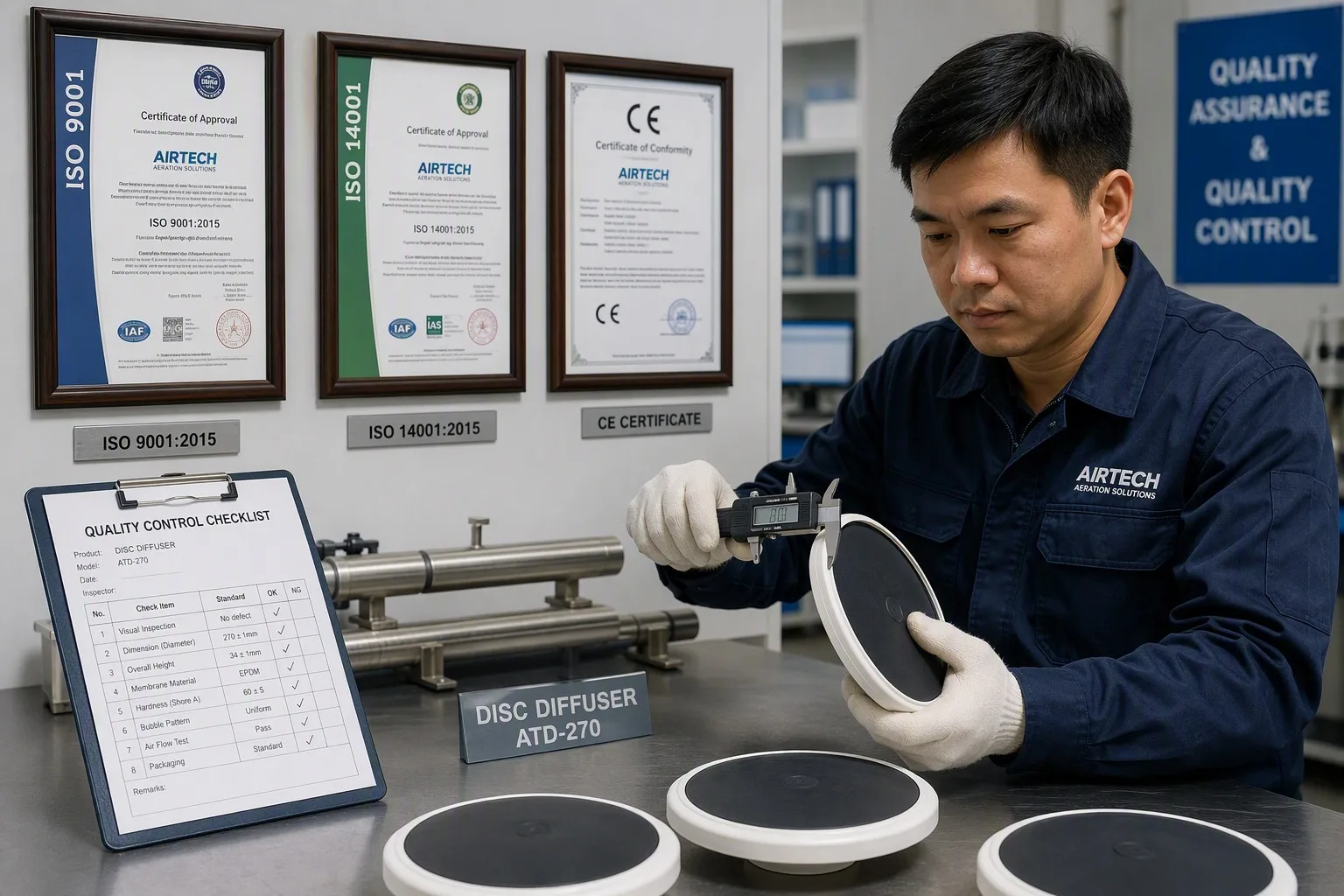
Figure 1: Aquasust international quality and compliance verification portfolio, including CE declaration, ISO 9001/14001, and third-party material safety screening reports.
1. European Union Market Access: CE Marking, REACH (EC 1907/2006), and RoHS Compliance
The European Union imposes some of the world's most comprehensive environmental regulations on polymeric products utilized in public environmental engineering infrastructure.
1.1 CE Marking and General Product Safety Mandates
While MBBR media operates as passive, non-powered biological carrier packing, EU public water tenders standardly mandate that manufacturers supply a formal Declaration of Conformity (DoC) demonstrating adherence to the EU General Product Safety Directive (GPSD) and applicable harmonized engineering benchmarks:
- Hydrodynamic Fatigue Resistance: Biofilm carriers must demonstrate long-term mechanical resilience under continuous air-water shear (air-to-water ratios typically 4:1 to 8:1) without shattering, cracking, or generating microplastic fragments that can bypass effluent retention sieves.
- Batch Consistency and Dimensional Tolerances: Manufacturing processes must operate under certified ISO 9001 quality management systems. Outer diameter tolerances must be maintained within ±0.5 mm, with wall thickness variations strictly held below ≤ 0.08 mm.
1.2 EU REACH Regulation (EC 1907/2006) Chemical Safety Thresholds
REACH governs the Registration, Evaluation, Authorisation, and Restriction of Chemicals across European territory:
- Substances of Very High Concern (SVHC) Screening: MBBR carriers must undergo comprehensive laboratory testing covering 240+ Candidate List SVHC substances. Each controlled substance must remain strictly below 0.1% (w/w).
- Phthalate Plasticizer Prohibitions: Plasticizers such as Bis(2-ethylhexyl) phthalate (DEHP) and Dibutyl phthalate (DBP) are strictly prohibited. Nitrifying bacteria (Nitrosomonas and Nitrobacter) are extraordinarily sensitive to phthalate migration, which severely inhibits cellular respiration and nitrogen removal kinetics.
1.3 RoHS 2.0 Directive (2011/65/EU and 2015/863/EU) Heavy Metals Limits
Although originally drafted for electrical components, municipal water authorities enforce RoHS 2.0 purity thresholds to eliminate bioaccumulative heavy metals in wastewater treatment ecosystems:
- Lead (Pb), Mercury (Hg), and Hexavalent Chromium (Cr6+): < 1,000 mg/kg
- Cadmium (Cd): < 100 mg/kg
- Polybrominated Biphenyls (PBB) and Polybrominated Diphenyl Ethers (PBDE): < 1,000 mg/kg
2. North American Regulatory Standards: US EPA Framework, NSF/ANSI 61, and ASTM Methods
North American water engineering frameworks combine federal environmental legislation with rigorous standardized material testing protocols.
2.1 US EPA Clean Water Act and 40 CFR Compliance
Under the Clean Water Act and federal regulations governing secondary municipal biological treatment (40 CFR Part 133), biological process internal components must exhibit complete biological and chemical inertia:
- Chemical and Hydrolytic Resistance: Virgin polyolefin carriers must resist degradation from continuous exposure to dissolved oxygen, volatile fatty acids, hydrogen sulfide (H2S), and ammonium salts.
- Zero Toxic Secondary Leaching: Carriers must not leach Volatile Organic Compounds (VOCs) or Semi-Volatile Organic Compounds (SVOCs) that could alter Whole Effluent Toxicity (WET) testing downstream.
2.2 NSF/ANSI/CAN 61 and Water Reuse Testing
In water reclamation, indirect potable reuse (IPR), and advanced tertiary treatment projects, North American consulting engineers frequently require toxicological assessment aligned with NSF/ANSI/CAN 61:
- Extended Soak Extraction Testing: Analysis of leachate in aggressive multi-pH buffer solutions (pH 5.0, 8.0, and 10.0) confirms that monomer migration (such as ethylene monomer < 1 mg/kg) and metal extraction remain well within acceptable human health drinking water risk limits.
- Cytotoxicity Screening: Confirms the material does not induce bacterial cytotoxicity, ensuring rapid, dense colonization of healthy heterotrophic and autotrophic biomass.
2.3 Key ASTM Standard Testing Methods for High-Density Polyethylene
North American engineering specifications rigorously verify physical properties against American Society for Testing and Materials (ASTM) protocols:
- ASTM D1505: Standard density testing confirming polymer base density within 0.960–0.980 g/cm³ for buoyant fluidization balance.
- ASTM D638: Tensile strength at yield (≥ 22.0 MPa) and elongation at break (≥ 350%).
- ASTM D1693 (Condition B): Environmental Stress-Crack Resistance (ESCR), testing resistance to surface active environments in 100% Igepal solution at 50°C, requiring F50 > 1,000 hours without micro-fissuring.

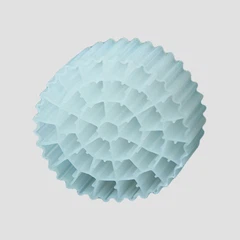
Figure 2: Close-up profile of Aquasust 100% virgin HDPE MBBR media featuring optimized geometric fins and high stress-crack resistance.
3. Polymer Integrity: The Necessity of 100% Virgin High-Density Polyethylene (Virgin HDPE)
Regulatory certification and 20-year structural longevity depend fundamentally on using pure virgin polymer resins without industrial post-consumer regrind.
3.1 Virgin Polymer vs. Recycled Plastic Regrind
Recycled post-industrial or post-consumer plastics have undergone multiple thermal-mechanical shear cycles and photo-oxidative degradation, severing molecular polymer chains:
- Catastrophic Drop in Impact Toughness: Under continuous 3D collision in aerated tanks, recycled plastics suffer rapid stress fatigue, leading to fin breakage, pulverization into microplastics, and premature failure within 2 to 3 years versus 15–20+ years for virgin resins.
- Uncontrolled Chemical Contaminants: Recycled resins contain residual heavy metal pigments, halogenated flame retardants, and industrial solvents that violate REACH, RoHS, and EPA safety criteria.
3.2 Identifying Calcium Carbonate (CaCO₃) Adulteration
Some low-cost suppliers incorporate heavy mineral powders (calcium carbonate, talc) at levels of 10% to 30% to reduce material costs and artificially raise initial carrier density:
- Structural Embrittlement: Inorganic particles disrupt the continuous polyethylene matrix, severely impairing tensile elongation.
- Acidic Leaching and Cavitation: Under industrial acidic effluents or nitrification conditions (where acid is biologically produced), CaCO3 dissolves out, creating porous voids that turn carriers spongy and prone to crushing.
- Ash Content Verification: Standard ash testing via ASTM D5630 / ISO 3451-1 (muffle furnace combustion at 600°C) mandates that premium virgin MBBR media maintain an ash content ≤ 0.5%. An ash content exceeding 2.0% confirms mineral adulteration.
4. Comprehensive Engineering Specifications & Quality Matrix
The following performance matrix summarizes critical physical, mechanical, and chemical thresholds for engineering-grade MBBR media:
| Evaluation Dimension | Standard Reference | Key Parameter | Engineering-Grade Compliance Target | Substandard / Regrind Characteristics |
|---|---|---|---|---|
| Polymer Base Density | ASTM D1505 / ISO 1183 | Density @ 23°C | 0.960 – 0.980 g/cm³ | <0.940 (floats uncontrollably) or >1.05 (sinks to tank floor) |
| Melt Flow Properties | ASTM D1238 / ISO 1133 | Melt Flow Rate (190°C/2.16kg) | 0.35 – 0.95 g/10min | >2.5 g/10min (low molecular weight, brittle failure) |
| Mechanical Tensile | ASTM D638 / ISO 527 | Tensile Yield & Elongation | Tensile ≥ 22.0 MPa; Elongation ≥ 350% | Tensile < 15.0 MPa; Elongation < 150% |
| Stress-Crack Resistance | ASTM D1693 (Cond. B) | ESCR (100% Igepal @ 50°C) | F50 > 1,000 Hours (No micro-fissuring) | F50 < 100 Hours (rapid fatigue breakage in tank) |
| Mineral Ash Content | ASTM D5630 / ISO 3451-1 | Ash Residue @ 600°C | ≤ 0.5% (100% Pure Virgin Polymer) | >5.0% – 25.0% (calcium carbonate compounding) |
| Restricted Heavy Metals | 2011/65/EU (RoHS 2.0) | Pb, Cd, Hg, Cr6+ | Pb, Hg, Cr < 1000 ppm; Cd < 100 ppm | Significant heavy metal contamination |
| Chemical Health Safety | EC 1907/2006 (REACH) | SVHC Candidate List Screening | All 240+ Substances < 0.1% (w/w) | Detectable phthalates or toxic aromatic hydrocarbons |
| Cold Brittleness | ISO 974 / ASTM D746 | Brittleness Temperature | ≤ -60°C | ≥ -15°C (brittle failure in cold winter handling) |

Figure 3: Dedicated automated extrusion and molding facility maintaining continuous dimensional tolerances and strict resin batch isolation.
5. Geographic Adaptation & Regional Project Compliance (GEO Factors)
- European & Nordic Installations (EN Standards & Cold Water Impact): In northern European projects, wastewater temperatures routinely drop to 6°C–10°C in winter. Biofilm carriers must guarantee impact performance at -60°C to prevent brittle fracture under vigorous aeration. European EPCs also require Mill Test Reports (MTR) and ISO 14001 Environmental Management verification.
- North American Municipal Infrastructure: IFAS and high-rate MBBR designs feature turbulent mixing regimes. Carriers require rounded outer structural rims to prevent accelerated mechanical wear against perforated stainless steel retention sieves.
- Tropical and Middle East Environments (UV Resistance & High Salinity): High solar irradiance and temperatures exceeding 40°C in the Middle East and Southeast Asia require UV stabilization via scientific compounding of Hindered Amine Light Stabilizers (HALS). Materials must pass ASTM G154 accelerated UV aging (maintaining ≥ 85% tensile retention after 1,000 hours of UV exposure).
Frequently Asked Questions (FAQ)
Q1: Is CE certification legally mandatory for MBBR media in the European Union?
While biological carriers are classified as non-powered components, EU environmental procurement mandates verified compliance with EU chemical directives (REACH SVHC, RoHS) and general consumer product safety standards. Public tenders require test reports from accredited independent laboratories (such as SGS, TÜV, or Intertek) verifying compliance.
Q2: How can field engineers quickly identify recycled plastics or mineral fillers on-site?
Engineers can perform three straightforward field checks:
1. Specific Gravity Float Test: In a saline solution calibrated to 0.98 g/cm³, pure virgin HDPE floats or remains neutrally suspended; mineral-filled media sinks immediately.
2. Flame & Odor Examination: Pure polyethylene burns smoothly with a yellow tip, blue base, and paraffin wax odor with translucent drippings. Regrind or fillers generate pungent acrid smoke and leave hard gray ash.
3. Mechanical Fold Resilience: Folding a carrier 180° multiple times should show slight stress whitening without cracking; brittle regrind snaps readily.
Q3: What documentation is required for shipping MBBR media to North American ports?
Shipments require a clear Harmonized Tariff Schedule (HTS) classification, a complete GHS-compliant Safety Data Sheet (SDS/MSDS) declaring non-hazardous polymer status, a TSCA compliance declaration confirming absence of restricted PFAS compounds, and a certified Manufacturer Mill Test Certificate (MTC).
Conclusion
Achieving stable long-term biological performance in MBBR systems begins with strict material compliance. Specifying 100% virgin high-density polyethylene validated against CE, REACH, RoHS, EPA, and ASTM standards eliminates operational risks, prevents downstream microplastic contamination, and protects long-term infrastructure investment.
For certified testing documentation, technical specifications, or complimentary pilot samples of Aquasust virgin HDPE biofilm carriers, visit chinambbr.com.