







By: Kate
Email:Kate@aquasust.com
Date: 7th November 2024

Understanding Dosage-Based Activated Sludge Processes in Wastewater Treatment
In the world of wastewater treatment, the dosage-based activated sludge process is an advanced approach that builds upon traditional activated sludge systems by adding specific materials that enhance the microbial environment, improve mass transfer efficiency, and increase overall purification capacity. This innovative process can be categorized into five types based on the materials added:
1. Integrated Fixed-film Activated Sludge (IFAS)
The IFAS process involves the addition of fixed or semi-fixed carriers to the activated sludge system. These carriers create a fixed biofilm that combines activated sludge with biofilm technology, leading to a more robust and efficient system. Unlike other types, IFAS includes a sludge return system, enabling better microbial activity control and sludge management.
2. Moving Bed Biofilm Reactor (MBBR)
The MBBR process utilizes suspended carriers to form a moving biofilm, providing a pure biofilm treatment without a sludge return system. MBBR is ideal for applications that prioritize a fully biofilm-based treatment setup. The fundamental difference between MBBR and IFAS lies in the sludge return; MBBR systems operate purely through biofilm on suspended carriers, whereas IFAS combines activated sludge and biofilm methods.

3. Coagulants
Adding coagulants to a system aids in the removal of suspended solids and enhances sedimentation performance. Coagulants are often used to improve the efficiency of traditional sludge processes, helping to remove particulate pollutants.
4. Fine Particulate Carriers
Fine particulate carriers improve microbial distribution and activity within the treatment system. These carriers enable microorganisms to grow and spread more effectively throughout the reactor, increasing the treatment capacity and stability.
5. High-Efficiency Microbial Cultures
The use of high-efficiency microbial cultures allows for faster degradation of organic matter and enhanced removal of nitrogen, phosphorus, and other pollutants. This addition helps in achieving specific treatment goals and improving the resilience of the system under varying load conditions.
Among these processes, IFAS and MBBR are the most commonly used. While IFAS employs semi-suspended or fixed rope-type carriers, MBBR uses suspended media with a density close to water, such as polyurethane or plastic, which allows the media to freely move and maintain optimal contact with the wastewater. During aeration, these carriers mix thoroughly with water, creating smaller air bubbles that increase oxygen utilization.
What's the Difference Between MBBR and IFAS?
The main difference is the presence of a sludge return system in IFAS, while MBBR operates purely with suspended biofilm without sludge return. In terms of media, MBBR uses floating suspended media, while IFAS often incorporates semi-suspended or fixed rope media, closely resembling contact oxidation processes.
MABR: A Glimpse into the Future of Biofilm Technology
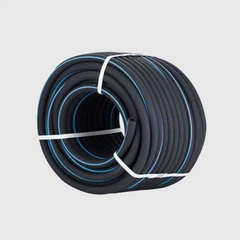
Membrane Aerated Biofilm Reactor (MABR) is an advanced technology that combines gas-separation membrane techniques with biofilm technology. Unlike conventional systems that rely on high-pressure blowers and bubble aeration, MABR uses specialized semi-permeable membrane tubing that provides oxygen directly to the biofilm, achieving near 100% oxygen transfer efficiency and significantly reducing energy consumption.
In an MABR system, oxygen and nutrients diffuse from opposite sides of the biofilm, creating unique layers of aerobic and anoxic zones from the inside out. This design enables nitrification and denitrification within the same biofilm, greatly enhancing nitrogen removal efficiency. Because of its unique, micro-aerobic environment, MABR excels in short-cut nitrification and denitrification, reducing carbon source usage by up to 40%.
Although MABR represents the future of wastewater treatment technology, large-scale implementation is currently limited due to the cost and maintenance requirements of the semi-permeable membranes.
Conclusion:
While MBBR and IFAS each bring distinct benefits to the activated sludge process by improving stability and treatment capacity, MABR is set to redefine biofilm technology. With its high oxygen efficiency and unique aeration system, MABR could lead the next generation in sustainable wastewater treatment.