






The choice of environmentally friendly packing:
The choice of filler type should consider the requirements of the respective process, and usually consider the following aspects:
(1) High mass transfer capacity Generally speaking, the mass transfer capacity of structured water treatment packing is higher than that of bulk packing
(2) The flux should be large. Under the premise of ensuring high mass transfer capacity, packing with high overflow point gas velocity or gas phase kinetic energy factor should be selected
(3) The pressure drop of the packing layer should be low
(4) The packaging has strong anti-fouling and anti-blocking functions, easy to disassemble and repair
Filler selection
Filling materials are divided into three categories: ceramic, metal and plastic.
(1) Ceramic filler Ceramic filler has good corrosion resistance and heat resistance. Ceramic fillers are cheap and have good surface wetting properties. They are fragile and fragile. It is widely used in processes such as gas absorption, gas washing and liquid extraction.
(2) Metal filler Metal filler can be made of a variety of materials, and corrosion should be considered first when selecting. Carbon steel fillers are inexpensive and have surface wetting functions. Non-corrosive or low-corrosive materials should be used first; stainless steel packing has strong corrosion resistance. Generally, they are usually able to corrode from common materials other than Cl–, but their cost is higher and the surface wetting function is poor. In some special cases (such as vacuum distillation process under very low spray density), the surface needs to be treated to obtain the application effect; it is made of titanium, special alloy steel and other materials. The resulting filler is expensive and is usually only used for certain highly corrosive materials. Generally speaking, metal fillers can be made into thin-walled structures with large flux, low gas resistance, and high impact resistance. It can be used under high temperature, high pressure and high impact strength, and has a wide range of applications.
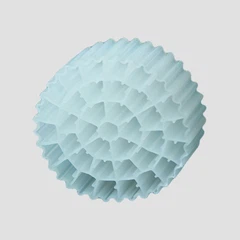
(3) Plastic filler The materials of plastic filler mainly include polypropylene (PP), polyethylene (PE) and polyvinyl chloride (PVC). In China, polypropylene is usually used. The plastic filler has good corrosion resistance and can withstand the corrosion of general inorganic acids, alkalis and organic solvents. Its heat resistance can be used for a long time at 100°C. Plastic fillers are lightweight, cheap, durable, impact-resistant, not fragile, and can be made into thin-walled structures. It has a large flux and pressure reduction, and is mainly used in equipment such as absorption, desorption, extraction and dust removal. The disadvantage of plastic filler is poor surface wettability, but it can be improved by proper surface treatment.