






By: Sunny Wu(Kate@aquasust.com)
Post Date: July 20, 2022
Post Tags: Suggestions By The Inventor Of Mbbr Process To The Technical Route Of China's Future Sewage Treatment Plants

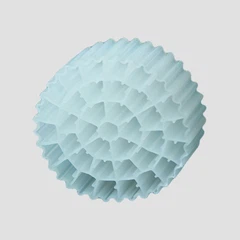
The MBBR process is one of the hot topics of discussion in the sewage treatment industry. The full English name of MBBR filter media is moving bed biofilm reactor (moving bed biofilm reactor). The inventor of the MBBR media process is Professor Hallvard Ødegaard from the Norwegian University of Technology. Prof. Hallvard Ødegaard's expertise in water treatment includes biofilm processes, disinfection processes, removal of humus from drinking water, and nutrient removal from wastewater.
Professor Hallvard Ødegaard has been teaching in the Department of Hydraulic and Environmental Engineering at the Norwegian University of Science and Technology (NTNU) in Trondheim, Norway since 1977. In 2011, he retired as an honorary professor at NTNU. In addition to academic research, he also provides consulting services for sewage treatment. For example, the sludge treatment project of the Hong Kong Shatin Sewage Plant is one of the consulting projects he participated in. In addition, he also serves as a visiting professor at world-renowned universities including EAWAG in Switzerland and Hokkaido University in Japan. Professor Hallvard Ødegaard was awarded the title of Distinguished Fellow by the IWA International Water Association for his outstanding contributions to the sewage treatment industry, and he was awarded the Royal Norwegian Knight of the Order of St. Olaf, First Class. Professor Hallvard Ødegaard is an IWA Distinguished Fellow. Prof. Hallvard Ødegaard was also awarded the Royal Norwegian Knight of the Order of St. Olaf 1st Class in 2011 for his outstanding contribution to the field of sewage treatment
Professor Hallvard Ødegaard came to China in September 2015 to participate in the 6th IWA Asia Pacific Water Conference held in Beijing at that time. At the high-end forum, he discussed the development model and prospects of future sewage treatment plants with experts in the field of sewage treatment from home and abroad.
After returning to Norway, Prof. Hallvard Ødegaard started to compile a road-map for energy-neutral wastewater treatment plants based on compact process technology (including MBBR technology) on the topic of future wastewater treatment plants. -neutral wastewater treatment plants of the future based on compact technologies (including MBBR)". The article was finally published in the March 2016 issue of Frontiers of Environmental Science & Engineering.
Professor Hallvard Ødegaard believes that environmentally friendly sewage plants that achieve water quality goals, energy self-sufficiency and resource recovery will be sustainable development, which will be the general development trend of sewage plants in the future, and more and more sewage plant projects have begun to explore and practice this new development concept. Prof. Hallvard Ødegaard summed up some of the goals that he thinks future sewage plants should achieve:
● The effluent from the WWTP must not have any negative impact on the receiving water body
● Resources in wastewater should be recovered, such as reused water, energy and nutrients such as phosphorus, etc.
● Sludge should be used as a resource, not waste, and the final sludge yield should be low.
● Compact processes should be used, as urban space is increasingly limited, and WWTPs should be covered or placed underground.
● WWTPs should be self-sufficient in energy and have a low carbon footprint, which means choosing processes that minimize energy consumption, but only if the other goals above are met.
In order to achieve these goals, Prof. Hallvard Ødegaard believes that an open attitude should be taken in the selection of processes in wastewater treatment plants, not only limited to traditional processes such as the activated sludge process. In this context, he discussed the future development direction of sewage treatment plants according to the following two process flow diagrams.
A. Based on proven and compact technologies such as nitrification/denitrification for mainstream nitrogen removal
B. Based on emerging compact technologies such as mainstream anammox
Prof. Hallvard Ødegaard talked about the factors that need to be considered in the design and construction of sewage plants including:
➜ Energy consumption for the process itself, heating/cooling and ventilation systems should be kept as low as possible. In particular, he emphasized: a) reducing the amount of aeration required, b) reducing the number of pumps used, for example, for backflow, and c) using a compact process to reduce the footprint (and capping or building in the ground);
➜ Energy needs to be recovered, such as the energy contained in biogas produced by anaerobic fermentation through CHP cogeneration technology. And this can be achieved by a) collecting sludge with high degradability, b) using pretreatment techniques such as sludge thermal hydrolysis;
➜ Removes organic trace contaminants and microbial contaminants.
Prof. Hallvard Ødegaard pointed out that based on the new compact technology, the energy balance of the sewage plant will be beneficial, which is difficult to achieve only with the existing conventional technology. The process flow diagram below shows what Professor Hallvard Ødegaard considers feasible for a future wastewater treatment plant.
This proposal for a future sewage plant emphasizes the consumption and recovery of energy. By applying a compact optimized process combining biological and physical/chemical methods, wastewater plants are able to minimize energy consumption. For example, the MBBR bio media process is used for biodegradation and high-efficiency solid-liquid separation, and the anammox process is used for nitrogen removal. At the same time, the WWTP can maximize energy recovery through anaerobic fermentation. Approaches include minimizing the biodegradation of the sludge before entering the digester and pre-processing it with thermal hydrolysis.

In addition to removing pollutants and realizing energy recovery, Professor Hallvard Ødegaard believes that future sewage plants should also have the ability to produce high-quality recycled water that can meet the needs of different uses such as drinking, irrigation, and toilet flushing, and river recharge. For water reuse, the process used by Professor Ødegaard is a ceramic membrane filtration technology based on ozone disinfection and flocculation pretreatment.
CONTACT SUNNY(Kate@aquasust.com | +86 150 5290 9872)
TO GET A FREE SAMPLE OF THE MBBR CARRIER!!!
