






At the biological contact oxidation pretreatment tank, these problems are mainly manifested in the following aspects:
(1) Mud accumulation and mud discharge
Because the hydraulic load of the biological contact oxidation pretreatment tank using YDT elastic corrugated three-dimensional elastic packing is relatively low, according to the operation experience of existing projects, the turbidity removal of the biological contact oxidation pretreatment tank is 30%-50% at the beginning However, with the extension of time, due to the enhancement of the biological effect on the filler, the turbidity removal rate will increase, and the suspended solids in the water will be removed in a large amount in the pretreatment tank. In addition, the aging biofilm will fall off at the bottom of the tank. Generate mud problem. When the mud at the bottom of the pool cannot be discharged in time, it will cause the accumulation of nitrite nitrogen in the pool. In addition, the mud will also produce anaerobic decay or breed insects, which will affect the quality of the effluent.
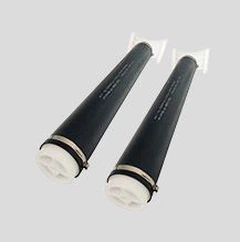
In the project using the membrane microporous aeration head, due to incomplete mud discharge, the aeration system will be blocked and the aerator will be damaged. For the contact oxidation pretreatment tank with perforated mud discharge measures, due to the large area of the bottom of the tank, the mud accumulation situation is more complicated, and the effect is not ideal.
(2) Flushing of filler
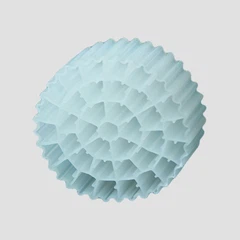
Three-dimensional elastic packing is a good biological carrier. The amount of biofilm on the honeycomb inclined tube packing increases rapidly, but when the biofilm is too thick, it will often affect the mass transfer process and the activity of the biofilm, or produce anaerobic effects. Affect the removal effect. In the actual project, the biofilm at the inlet end is too thick and the upper layer of filler is agglomerated.
(3) The hydraulic load is too low
The specific surface area of YDT male f-corrugated three-dimensional elastic packing is generally 20-30m3/m. In between, therefore, the biomass attached to the surface of the honeycomb inclined tube filler is relatively small, and the reaction time needs to be increased to ensure a certain organic matter removal rate. The hydraulic retention time of more than 1 hour will cause the increase of infrastructure costs and floor space.