







Collect! Aeration Tank Operation and Maintenance Manual (Part 4)
Written by: Jasmine
Contact email: Jasmine@juntaiplastic.com
1. Five major items of routine monitoring of aeration tank water intake
1.1 Temperature
1.2 PH value
1.3 COD and BOD5
1.4 Ammonia nitrogen and phosphate
1.5 Toxic substances
2. Routine monitoring project of mixed liquid in aeration tank
2.1 How to control the MLSS or MLVSS value of the aeration tank?
2.2 What is the sludge settling ratio (SV) of the aeration tank mixture? What is the function?
2.3 What abnormal phenomena are prone to occur when measuring the SV value? Why?
2.4 What is Sludge Volume Index (SVI)?
2.5 What is the reason for the increase in the SVI value of the aeration tank mixture?
3. Operation management of aeration tank - foam problem
3.1 Brown-yellow foam
3.2 gray-black foam
3.3 White foam
3.4 Colored foam
4. Operation management of aeration tank - sludge expansion
4.1 The environmental conditions that cause the expansion of filamentous bacteria in activated sludge are:
4.2 Conditions and causes that lead to the expansion of non-filamentous bacteria
4.3 Measures to control sludge bulking in aeration tank
Written by: Jasmine
Contact email: Jasmine@juntaiplastic.com
4. Operation management of aeration tank - sludge expansion
4.1 The environmental conditions that cause the expansion of filamentous bacteria in activated sludge are:
4.1.1 Too little organic matter in the influent water and low F/M in the aeration tank, resulting in insufficient microbial food.
4.1.2 The nitrogen, phosphorus and other nutrients in the influent water are insufficient.
4.1.3 PH is too low, which is not conducive to the growth of microorganisms.
4.1.4 The dissolved oxygen in the mixed solution of the aeration tank is too low to meet the needs of microorganisms.
4.1.5 The water quality or quantity of the incoming water fluctuates too much, which will have an impact on the microorganisms.
4.1.6 When the sewage entering the aeration tank produces a lot of H2S (over 1-2 mg/l) due to "corruption", it will also lead to the excessive reproduction of filamentous sulfur bacteria, which will expand the sludge of the filamentous sulfur bacteria.
4.1.7 The suitable temperature for filamentous bacteria to multiply is 25℃~30℃, so the filamentous bacteria sludge bulking is easy to occur in summer.
Written by: Jasmine
Contact email: Jasmine@juntaiplastic.com
4.2 Conditions and causes that lead to the expansion of non-filamentous bacteria
The expansion of non-filamentous bacteria is due to the abnormal physiological activity of the bacteria in the bacteria micelles, which leads to the deterioration of the settling performance of activated sludge.
There are two types.
One is that the influent water contains a large amount of dissolved organic matter, which makes the sludge load F/M too high, while the influent water lacks sufficient nitrogen, phosphorus and other nutrients, or the dissolved oxygen in the mixed liquid is insufficient. When the F/M is high, bacteria will inhale a large amount of organic substances into the body, and due to lack of nitrogen, phosphorus or insufficient dissolved oxygen, normal catabolism cannot be carried out in the body.
At this time, the bacteria will secrete excess polysaccharides into the body. These substances have strong hydrophilicity due to the many hydroxyl groups in the molecular formula. The combined water of activated sludge is as high as 400% (normal sludge combined water is about 100%).
It is viscous and gelatinous, so that the activated sludge cannot be effectively separated and concentrated in the secondary sedimentation tank. This sludge bulking is called viscous bulking.
Another non-filamentous bacteria swelling is due to the large amount of toxic substances contained in the influent water, resulting in sludge poisoning. The bacteria cannot secrete enough viscous substances to form flocs, so it is impossible to effectively separate and concentrate the mud and water in the secondary sedimentation tank. This sludge bulking is sometimes referred to as non-viscous bulking or discrete bulking.
Written by: Jasmine
Contact email: Jasmine@juntaiplastic.com
4.3 Measures to control sludge bulking in aeration tank
The measures to control sludge bulking in aeration tanks can be roughly divided into three categories. One category is temporary control measures, the second category is process operation control measures, and the third category is permanent control measures.
4.3.1 Temporary control measures to control sludge bulking in aeration tanks
Temporary control measures are mainly used to control sludge bulking due to temporary reasons and prevent sludge loss, resulting in excessive SS of effluent or a large amount of sludge loss.
Temporary control measures include flocculant-assisted sedimentation and fungicide sterilization. The flocculant-assisted sedimentation method is generally used for sludge bulking caused by non-filamentous bacteria, while the sterilization method is suitable for sludge bulking caused by filamentous bacteria.
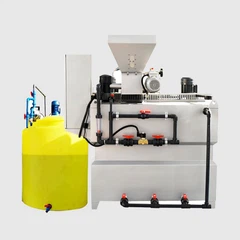
A) The flocculant-assisted sedimentation method refers to adding flocculant to the aeration tank where sludge expansion occurs to enhance the coagulation performance of the activated sludge and make it easy to achieve sludge-water separation in the secondary sedimentation tank.
The flocculants in coagulation treatment can generally be applied at this time. Commonly used flocculants include inorganic flocculants such as polyaluminum chloride and polyferric chloride, and organic polymer flocculants such as polyacrylamide. The flocculant can be added at the inlet of the aeration tank or at the outlet of the aeration tank, but the dosage should not be too much, otherwise it may destroy the biological activity of bacteria and reduce the treatment effect. When using a flocculant, the dosage of the agent mixed with aluminum oxide can be about 10mg/l.
B) Sterilization method refers to adding chemicals to the aeration tank where expansion occurs to kill or inhibit the reproduction of filamentous bacteria. So as to achieve the purpose of controlling the bulking of filamentous bacteria sludge.
Commonly used fungicides such as liquid chlorine, chlorine dioxide, sodium hypochlorite, bleaching powder, hydrogen peroxide, etc. can be used. In the actual chlorination process, it should be gradually carried out from small doses to large doses, and the biological phase should be observed and the SVI value should be measured at any time. Generally, the chlorination is 0.3% to 0.6% of the dry solid weight of the sludge. When the SVI value is found to be lower than the maximum Dissolving of filamentous fungus hyphae is observed in the allowable value or microscopic examination, and the dosing should be stopped immediately. Adding hydrogen peroxide (H2O2) has a continuous inhibitory effect on filamentous bacteria, too low will not work, and too high will lead to sludge oxidation and disintegration.
Written by: Jasmine
Contact email: Jasmine@juntaiplastic.com
4.3.2 Adjustment operation process measures to control sludge bulking
Adjusting the operating process control measures is very effective for sludge bulking caused by improper control of process conditions. The specific methods are:
A) Add clay, slaked lime, raw sludge or digested sludge at the inlet of the aeration tank to improve the settling performance and compactness of the activated sludge.
B) Make the sewage entering the aeration tank in a fresh state, such as taking pre-aeration measures, so that the sewage is in an aerobic state as soon as possible to avoid the formation of an anaerobic state, and at the same time blow off harmful gases such as hydrogen sulfide.
C) Strengthen the aeration intensity, increase the dissolved oxygen concentration of the mixed solution, and prevent local hypoxia or anaerobicity of the mixed solution.
D) Supplement nitrogen, phosphorus and other nutrients to maintain the balance of carbon, nitrogen, phosphorus and other nutrients in the mixture. On the premise of not reducing the sewage treatment function, the F/M should be appropriately increased.
E) Increase the sludge return ratio, reduce the residence time of sludge in the secondary sedimentation tank, and avoid anaerobic state in the secondary sedimentation tank.
F) When the pH value is low, it should be adjusted by adding alkaline substances to increase the pH value of the inlet water of the aeration tank.
G) Strengthen and improve the timeliness of laboratory analysis by means of online instruments, give full play to the role of the pretreatment system, and ensure that the sludge load in the aeration tank is relatively stable.
Written by: Jasmine
Contact email: Jasmine@juntaiplastic.com
4.3.3 Permanent control measures to control sludge bulking
Permanent control measures refer to the full consideration of the renovation or design expansion or new construction of existing facilities. So that sludge bulking does not occur, or there are preventive facilities when sludge bulking occurs. A common permanent measure is to install a biological selector in front of the aeration tank.
The selective cultivation of microorganisms through the selector means that only the growth and reproduction of bacteria in the micellar group is used in the system, which is not conducive to the mass reproduction and growth of filamentous fungi. So as to avoid the occurrence of filamentous bacteria sludge bulking in the biological treatment system. There are three selectors, aerobic selector, anaerobic selector, anoxic selector.
A) The mechanism of the aerobic selector is to provide a high-load area with sufficient dissolved oxygen and sufficient food, so that the bacterial micelles can take the lead in preempting the organic matter, and do not give the filamentous bacteria the opportunity to grow excessively.
For example, the selector in the activated sludge process is to carry out regenerative aeration before the return sludge enters the aeration tank to reduce the content of highly cohesive substances in the return sludge, so that the microorganisms enter the endogenous respiration section and increase the bacteria glue. The ability of the agglomerated bacteria to absorb organic matter and the ability to compete with filamentous bacteria, so that both filamentous and non-filamentous expansion can be inhibited. In order to enhance the effect of the microbial selector, a sufficient amount of nitrogen, phosphorus and other nutrients can be added during the re-aeration process to improve the activity of the sludge.
B) The principle that the anoxic selector controls the sludge bulking is: most of the bacteria micellar bacteria can use the combined oxygen in the nitrate in the selector as the oxygen source to carry out biological reproduction, while the filamentous bacteria (Chlamydia) do not have this Therefore, it is inhibited in the selector, and the proliferation lags behind the bacterial micelle species, which greatly reduces the possibility of filamentous bacteria swelling.
C) The principle of anaerobic selector to control sludge bulking is that most types of filamentous bacteria (Chlamydia) are aerobic and will be inhibited under anaerobic conditions. However, most of the bacteria in the bacterial micelles are facultative bacteria, which undergo anaerobic metabolism in a short period of time under anaerobic conditions and continue to proliferate. However, the setting of the anaerobic selector will lead to the possibility of the swelling of the filamentous bacteria in the filamentous bacteria, because the anaerobic metabolism of the bacteria micelles will produce hydrogen sulfide, which provides conditions for the reproduction of the filamentous bacteria. Therefore, the hydraulic retention time of the anaerobic selector should not be too long.
In actual operation, with the above three methods, temporary control measures should be given priority according to the actual situation to prevent the system from failing due to the massive loss of sludge. At the same time, the causes of sludge bulking should be carefully analyzed, starting from the root causes, and adopting process operation adjustment methods to control the occurrence of bulking. For treatment plants with more and more serious sludge bulking, permanent measures should be taken to transform them in time to avoid long-term excess.
Written by: Jasmine
Contact email: Jasmine@juntaiplastic.com