






By: Kate
Email:kate@aquasust.com
Date: 27th November 2024

The aeration tank is one of the core components of wastewater treatment, and its design and quantity calculation directly affect treatment efficiency and operational costs. This article outlines the key design principles and calculation steps for aeration tanks, including a specific example for illustration.
1. Key Considerations for Aeration Tank Design
1. Target Parameters
Determine the required water quality based on influent and effluent parameters (e.g., BOD, COD, TSS, ammonia nitrogen). For example:
- Influent BOD: 270 mg/L
- Effluent BOD: ≤20 mg/L
- Influent flow rate: 10,000 m³/d
2. Aeration Type Selection
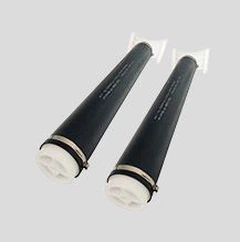
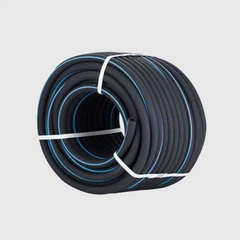
Common aeration methods include surface aeration, mechanical aeration, and pure oxygen aeration. Blower-based aeration with fine bubble diffusers or tube diffusers is widely used.

3. Oxygen Demand Calculation
- Determine the amount of pollutants (BOD, ammonia nitrogen) to be removed.
- Use the typical oxygen demand formula:
Oxygen Demand = BOD Load to Be Removed (kg/day) / Oxygen Utilization Rate
4. Mixed Liquor Suspended Solids (MLSS)
Select an appropriate MLSS concentration based on the process requirements, typically 2,000–5,000 mg/L to ensure microbial activity.
5. Hydraulic Retention Time (HRT) and Tank Volume
- HRT is usually designed for 4–8 hours.
- Effective tank depth is generally 4–6 meters.
- Calculate tank volume:
V = Q × HRT / 24
where Q is the flow rate (m³/h).

2. Steps for Aeration Tank Quantity Calculation
Example: Treating a flow of 10,000 m³/day with influent BOD at 270 mg/L and effluent BOD at 20 mg/L.
1. Determine the BOD to Be Removed
BOD_removed = (270 - 20) × 10,000 = 2,500,000 mg/day = 2,500 kg/day
2. Calculate Oxygen Demand
Assuming an oxygen utilization rate of 20% and 1.5 kg O₂ required per kg BOD removed:
Oxygen Demand = (2,500 × 1.5) / 0.2 = 18,750 kg/day
3. Configure Aeration Equipment
- Choose diffusers: For example, fine bubble diffusers with an airflow range of 1.5–8 m³/h and an oxygen transfer efficiency of 30%.
- Calculate the required airflow:
Air Flow = 18,750 / (0.2 × 0.3) = 312,500 m³/day
Convert to hourly airflow:
312,500 ÷ 24 = 13,020 m³/h
4. Calculate Tank Volume
Assuming HRT = 6 hours:
V = (10,000 × 6) ÷ 24 = 2,500 m³
5. Determine the Number of Diffusers
Assuming each diffuser has an airflow capacity of 5 m³/h:
Number of Diffusers = 13,020 ÷ 5 = 2,604
3. Practical Recommendations for Engineering Projects
- Tank Shape Selection
Rectangular or circular tanks are common for typical aeration systems, while deep tanks are ideal for large treatment capacities in space-limited scenarios.
- Equipment Redundancy
Install 1.1–1.2 times the calculated equipment to handle load fluctuations or equipment maintenance.
- Online Monitoring
Include a dissolved oxygen (DO) monitoring system to balance oxygen supply and avoid over-aeration or oxygen deficiency.
Conclusion
Designing an aeration tank requires a comprehensive understanding of pollutant loads, oxygen supply capabilities, hydraulic conditions, and operational costs. Detailed calculations and proper equipment configuration ensure effective treatment and optimized costs. In practical applications, adjustments and optimizations should be made based on specific needs and site conditions.