

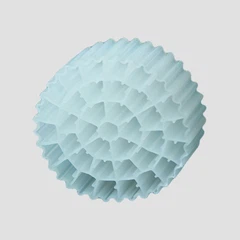





In the practical application of MBBR process projects, it is often heard that many friends who have just tried the process say that it is difficult to hang the filler film, unable to hang the film, and so on. There are significant differences between MBBR biological fillers and commonly used fixed bed fillers, and there are many factors that affect whether they can quickly and effectively form membranes. For example, the quality of the filler, pH value, temperature, and aeration rate can all affect the speed and effectiveness of membrane formation.
MBBR placement stage
When adding fillers, observe whether there is any accumulation phenomenon. Once accumulation occurs, stop adding. Continue to observe the next day before adding. 2.When adding fillers, intermittent aeration is used, with continuous aeration at night, but the amount of aeration needs to be reduced.
After running for 24 hours, continuously introduce water for 2-3 hours, and then continue the above aeration. After running for 48 hours, observe the film formation on the packing and increase the water inflow to extend the water inflow time. Check the dissolved oxygen status in the tank, preferably maintained at around 1.5-2.0mg/L. After 72 hours of operation, contact the water inlet and gradually increase it to the design requirements. According to the routine inspection of the water quality of the inlet and outlet, it is expected to meet the design water quality requirements in about 7 days.

Cultivation stage of biofilm
The cultivation of biofilms refers to the use of certain methods to generate and accumulate a certain amount of microorganisms in the treatment system, and to achieve a certain thickness of biofilm on the packing material. The cultivation methods mainly include static cultivation and dynamic cultivation.
Static cultivation
The so-called static cultivation is to prevent newly formed microorganisms from flowing away with the water, provide as much contact time between microorganisms and the packing layer as possible, and accelerate the formation of biofilm. In the initial stage, in order to avoid the single nutrient of wastewater, BOD5 is administered once a day; N: Add nutrient substrates such as urea, diamine, and white sugar in a ratio of 00:5:1. Firstly, inject the inoculated sludge (10% biochemical effective volume) and wastewater pump into the biochemical tank, and then start aeration cultivation. The stacking volume of fillers in the biochemical tank shall be 35% to 40% of the effective volume of the reaction tank. Let it stand for 4-5 hours without aeration, allowing the fixed microorganisms to inoculate onto the packing, then aerate for 1 hour, let it stand for 2 hours, aerate for 1 hour, repeat the process. After 4-5 days, the surface of the packing has been completely covered with biofilm, and on the 6th day, continuous low water inflow begins.
Dynamic cultivation
After 6 days of exposure cultivation, a thin layer of yellow brown biofilm has grown on the surface of the packing material. Therefore, continuous water inflow is used for dynamic cultivation, and the water inflow is adjusted to control dissolved oxygen between 2-4mg/L (measured by a dissolved oxygen meter). After about 15 days, there were some amoebas and roaming insects (observed under a biological microscope) on the filling material, which felt sticky and slippery when touched by hand. After 20 days, protozoa such as flagellates, bell worms, and free bacteria of paramecium appeared. After 20 days of cultivation, the appearance of post protozoa such as rotifers and nematodes indicates that the biofilm has grown. Continuous industrial operation can begin.
The domestication stage of biofilm
The purpose of domestication is to select microorganisms that are suitable for the actual water quality situation, eliminate useless microorganisms, and for treatment processes with denitrification and phosphorus removal functions, domestication can make nitrifying bacteria, denitrifying bacteria, and phosphorus accumulating bacteria the dominant bacterial groups. The specific approach is to first maintain the normal operation of the process, and then strictly control the process control parameters. The average dissolved oxygen (DO) should be controlled between 2-3mg/l, and the aeration time of the aerobic tank should not be less than 5 hours. During this process, various water quality indicators and control parameters should be measured every day. When the average thickness of the biofilm is around 0.2-0.5mm, the biofilm cultivation is successful until the effluent BOD5, SS, CODCr and other indicators meet the design requirements.

MBBR Biological Filler Selection
1. Material
The MBBR process is a new type of process that requires one-time addition without the need to replace biological fillers, so the material requirements are very high. Generally, high-purity HDPE material is selected for biological fillers with a lifespan of more than 15 years. If inferior materials are used, it is easy to cause the biological filler to break and block the pipeline in later use engineering.
2. Production process level
Biological fillers are designed with geometric structures through fluid mechanics, generally cylindrical and porous. In production engineering, the production process technology requirements for the manufacturer are extremely high, from mold development to professional production machines and temperature and speed adjustment during the production process. For example, some biological fillers with uneven wall thickness are prone to insufficient toughness.
3. Specific surface area
The specific surface area of biological fillers directly affects the number of microorganisms cultivated per cubic meter of water, and the more microorganisms cultivated, the stronger the sewage treatment capacity. However, in the actual selection of fillers, it is not only necessary to consider the specific surface area of biological fillers, but also the diameter and pore size of the fillers. The diameter of the filler is related to the aperture of the interception net. The pore size of the filler not only affects the specific surface area, but also affects whether the aging biofilm is easy to fall off. Currently, some MBBR bio fillers on the market have a large specific surface area but small pores. The initial membrane hanging and post-treatment effects are good, but after one or two years of actual operation, the aging biofilm cannot fall off, resulting in poor water quality in the later stage.