





Choose MBBR or MBR process for sewage treatment? Comparison of MBBR or MBR processes
With the rapid development of the world economy, sewage discharge standards are improving. High-standard sewage treatment plants have become the current trend of choice for sewage treatment plants because of their good social-environmental benefits, low land occupation, and low noise. In the process of constructing sewage plants with high discharge standards, there are mainly two process options, MBR and MBBR. For a sewage treatment plant under rapid construction, how to choose a water treatment process?
The following table is a poll survey of the processes used by some large sewage treatment plants in LinkedIn:

MBR and MBBR are widely used technologies in wastewater treatment, especially suitable for industrial applications with high BOD loads, such as food and beverages, dairy products, chemicals, and leachate.
Because industrial applications usually have volatile water flowing in, the balance tank is used to store water and ultimately perform PH neutralization and flocculation.
You could contact us:
Contact name: Jasmine
Contact email: Kate@aquasust.com
Whatsapp number: 8618868159881.
A screen and sometimes a clarifier is then used to remove large amounts of solids.
MBR stands for membrane bioreactor, which is a combination of membrane technology such as ultrafiltration and activated sludge technology.
Ultrafiltration membranes are mostly immersed in activated sludge tanks or separate tanks. Microorganisms digest the organic matter in sewage while consuming oxygen. Since the membrane retains microorganisms and organics in the basin, a higher MLSS concentration can be obtained.
You could contact us:
Contact name: Jasmine
Contact email: Kate@aquasust.com
Whatsapp number: 8618868159881.
The high microbial content requires a huge amount of air, not only for oxygen supply, but also for producing sufficient mixing, membrane flushing and limiting pollution.
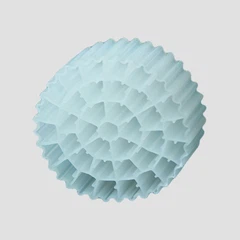
MBBR is short for moving bed bioreactor, which uses a free-floating plastic packing medium to grow attached biofilms. To keep the plastic filled media in suspense, their density is close to that of water. Continuous aeration or mixing can ensure good contact between organic matter and attached biofilm, thereby effectively removing BOD.
So, what are the advantages and disadvantages of the two processes? The following is a comparison of the two processes (for an intuitive comparison, please refer to the table at the end of the article).
You could contact us:
Contact name: Jasmine
Contact email: Kate@aquasust.com
Whatsapp number: 8618868159881.
Different definitions:
MBR is a membrane bioreactor:

MBBR as a carrier fluidized bed biofilm technology:

The working principle is different:
MBR is activated sludge method + membrane separation. MBR (membrane bioreactor) is a new type of water treatment technology that combines a membrane separation unit and a biological treatment unit. It replaces the secondary settling tank (or decanter) in the bioreactor with a highly anti-pollution FR-MBR membrane module. Maintaining a high concentration of activated sludge reduces the footprint of sewage treatment facilities and reduces the amount of sludge by maintaining a low sludge load.

You could contact us:
Contact name: Jasmine
Contact email: Kate@aquasust.com
Whatsapp number: 8618868159881.
MBBR is a biofilm method.MBBR (carrier fluidized bed moving bed biofilm reactor), its principle is to increase the biomass and biological species in the reactor by adding a certain amount of suspended carriers to the reactor, thereby improving the processing efficiency of the reactor. Since the density of the filler is close to that of water, it is completely mixed with water during aeration. In addition, each carrier has different biological species inside and outside, and some anaerobes or facultative bacteria grow inside. The environment for microbial growth is Three phases of gas, liquid and solid. The collision and shearing effect of the carrier in the water makes the air bubbles smaller and increases the utilization of oxygen. The outside is good for bacteria, so that each carrier is a micro-reactor, so that the nitrification and denitrification reactions exist at the same time. Improve the treatment effect. The core of MBBR is to increase the filler. The uniquely designed filler floats with the water flow in the reaction tank under the disturbance of blast aeration, and drives the attached biological flora to fully contact the pollutants and oxygen in the water body. Diffusion enters the biofilm and is degraded by microorganisms. The attached microorganisms can reach very high biomass. Therefore, the biological concentration in the reaction tank is several times that of the suspended activated sludge process, and the degradation efficiency is therefore doubled.

You could contact us:
Contact name: Jasmine
Contact email: Kate@aquasust.com
Whatsapp number: 8618868159881.
Removal of organic matter:
Both processes have higher removal rates for COD, BOD, and ammonia nitrogen. High anti-pollution FR-MBR membrane
Relying on its higher sludge load, the MBBR process relies on the biofilm on its filler.
Comparison of TN and TP removal rates:
Both processes need to rely on digestive juice reflux for denitrification to remove TN, TP removal needs to rely on chemical phosphorus removal, and MBR process also needs to rely on front-end chemical phosphorus removal for TP removal.
SS removal comparison:
MBBR has no effect on SS removal, and needs to rely on the back-end precipitation or filtration process to remove SS; MBR membrane can remove SS very well.
Comparison of cost treatment:
The filler in the MBBR process can be added at one time, and the subsequent operation only needs to strengthen the management of the biofilm on the filler. Large investment during the construction period, simple operation and maintenance. The service life of MBR process membrane assembly is generally 4-8 years, and the replacement cycle is relatively short. During daily operation and management, maintenance work such as chemical cleaning and off-line cleaning of the membrane module is required. The operating cost is relatively high, and the replacement cost of the membrane module is also high.
You could contact us:
Contact name: Jasmine
Contact email: Kate@aquasust.com
Whatsapp number: 8618868159881.
MBR and MBBR main comparison table
|
MBR |
MBBR |
Same point |
The difference |
|
|
Membrane bioreactor |
Moving bed biofilm technology |
/ |
Membrane biology and biofilm |
|
|
Principle |
Activated sludge method + membrane separation |
Biofilm method |
Rely on activated sludge method to remove organic matter |
/ |
|
Water quality |
In addition to TP, it can meet the requirements of four types of water bodies, even three types of surface |
In addition to TP and SS, it can meet the requirements of four types of water bodies |
/ |
MBR effluent is more clear and transparent, while MBBR cannot remove SS alone |
|
Cost |
The initial cost investment is large, and the later operation and maintenance are also large |
The initial investment is large, and the later operation and maintenance are small |
Large initial investment |
The cost of replacing the MBR membrane in the later stage is higher |

In short, with the development of the global economy, high-standard sewage treatment plants have become the trend of sewage treatment in large and medium-sized cities. MBR and MBBR processes are the main processes in sewage treatment plants. From the perspective of process alone, MBR has advantages over MBBR and the initial investment cost is also relatively large. However, if the replacement cost of MBR membrane modules is considered to be higher (this problem is currently being solved gradually , The emergence of high-quality anti-pollution FR-MBR membranes and the reduction in the cost of membrane raw materials have gradually reduced the price of MBR membranes to a reasonable range). Therefore, the specific process to be selected for a high-discharge standard sewage treatment plant should be determined after a comprehensive comparison.
You could contact us:
Contact name: Jasmine
Contact email: Kate@aquasust.com
Whatsapp number: 8618868159881.