






What "black technology" does the sewage treatment plant in the Winter Olympics have?
Written By: Jasmine
Contact Email: Jasmine@AquaSustplastic.com
In order to implement the concept of "green Olympics", CECEP fully utilizes the advantages of its main business and undertakes the guarantee work of some solid waste and sewage treatment in Beijing during the Winter Olympics.
The Xiaotangshan Reclaimed Water Plant and the Machikou Reclaimed Water Plant of Central Water, which are affiliated to CECEP, use smart water means such as precise aeration system and multi-stage A2O process to improve quality and reduce consumption. In addition, the two water plants also use the sewage source heat pump technology to extract the low-grade heat energy contained in the sewage to heat the plant area. It is estimated that during the Winter Olympics, the Xiaotangshan Reclaimed Water Plant will treat 60,000 tons of sewage, reduce COD emissions by 10 tons, and reduce ammonia nitrogen by 0.9 tons. 0.75 tons of emission reduction.

1. Improve the quality and reduce consumption of smart water, and support the drainage standards of the Winter Olympics
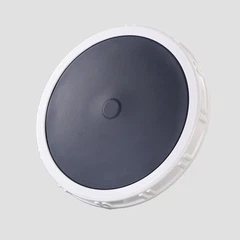
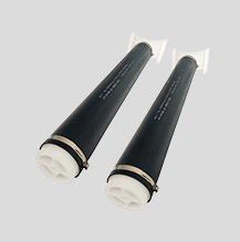
Xiaotangshan Reclaimed Water Plant adopts precise aeration system, which is relatively continuous and uninterrupted traditional aeration method, which saves about 1/5 of the fan power (about 1500kWh/day) compared to the same period last year; Effectively ensure the water quality discharge during the Winter Olympics, and improve the quality of surrounding water bodies and ecological environment.
The biochemical system of the water plant adopts a multi-stage A2O process, and the multi-stage water inflow ensures the full utilization of the organic matter in the raw water. While increasing the organic matter removal rate, it also reduces the dosage of carbon source chemicals. It is estimated that during the Winter Olympics, the daily carbon consumption of Xiaotangshan Reclaimed Water Plant and Machikou Reclaimed Water Plant will not exceed 0.9 tons/m³.

In addition, by controlling the concentration of activated sludge in the reclaimed water plant and increasing the endogenous respiration of the sludge, the dosage of carbon source chemicals was further reduced to ensure that the effluent reached the standard during the Winter Olympics. It is estimated that during the Winter Olympics, the daily dosage of phosphorus removal chemicals in Xiaotangshan Reclaimed Water Plant and Machikou Reclaimed Water Plant will not exceed 0.7 tons/m³, and phosphorus emission reduction will be about 0.4 tons.

2. Water source heat pumps are energy-efficient and efficient, helping the Winter Olympics to reduce carbon emissions
Low-grade thermal energy in sewage is a renewable thermal energy resource. Through the sewage source heat pump technology, the rich low-grade heat energy contained in the sewage is extracted to provide winter heating services for the plant area. For every 4 ℃ temperature difference extracted from sewage, approximately 4 kW h/m³ of thermal energy can be generated, which saves the cost of boiler room and traditional air conditioning.

3. Accurately implement epidemic prevention and control to ensure the health and safety of the Winter Olympics
In 2021, Xiaotangshan Reclaimed Water Plant has undertaken the sewage treatment of medical wastewater from Xiaotangshan Hospital and surrounding isolation points. This year, Changping Company will continue to do a good job in the key prevention and control of key water plants on the basis of past experience to ensure personnel health and environmental safety during the Winter Olympics. In order to ensure the effective killing of germs in the effluent, Changping Company has also formulated a sodium hypochlorite and ozone double disinfection plan - the ozone emergency cold backup can be activated at any time during special periods; Effective removal of bacterial flora, etc., ensures safe drainage during the Winter Olympics. During the Winter Olympics, Machikou and Xiaotangshan Reclaimed Water Plant of Central Water Changping Company will go all out to provide drainage guarantee services, and inject the “green power” of CECEP into the “Green Winter Olympics” throughout the process.

4. What is the "black technology" of precise aeration?
Precise aeration is the product of the advanced manual control method of sewage treatment plants from the early extensive manual control method to the modern refined automatic control method.
The traditional activated sludge process has been used in the world for hundreds of years. Many authoritative experts at home and abroad have repeatedly proposed and emphasized that it is necessary to deeply dig the century-old activated sludge process to realize the optimal control and efficient operation of the biochemical treatment process.

The primary goal of precise aeration is to ensure the stable operation of the biochemical treatment process and the stable compliance of the effluent, so as to achieve the energy saving and consumption reduction of the blast aeration system and the reduction of the operating cost of the sewage treatment plant.
The automation and refined management and control of sewage treatment plants have long been advocated internationally. Precision aeration is an effective tool to achieve refined management of sewage plants, and requires the joint efforts of all parties including blowers, aeration equipment, and precision aeration systems.
The precision aeration system can realize various complex air supply schemes, such as intermittent aeration, micro aeration, normal aeration, dissolved oxygen distribution control, etc.; it can help the sewage treatment plant to realize the fine adjustment of the process and adapt to various processes , and can be adjusted with process changes; it can also notify the main control of the blower to adjust the air volume according to the current required aeration volume to prevent abnormal conditions such as surge and save the power consumption of the blower.

Why achieve precise aeration?
Precise aeration is the core control unit of smart water affairs!
In the biological treatment process of the sewage treatment plant, if the aeration amount is insufficient, the process operation will deteriorate, and the effluent quality will exceed the standard; if the aeration amount is too much, it will lead to high energy consumption and increase the operating cost of the sewage treatment plant. Therefore, the efficient and economical operation of the sewage treatment plant can only be ensured by rationally distributing and accurately adjusting the aeration volume of each area according to the actual demand.

A good automatic control system for the sewage treatment process can not only ensure the continuous and stable operation of the sewage treatment plant equipment, but also realize energy saving and consumption reduction. Precision aeration control system is a set of energy-saving technologies developed in recent years to better control blast aeration.
The energy consumption of sewage treatment plants in my country is mainly electricity consumption. The electricity consumption per ton of sewage treatment is about 0.2-0.3 kWh, and the electricity cost accounts for about 50%-70% of the sewage treatment cost. On the basis of the construction of sewage treatment plants in my country, through the optimized operation of existing facilities, there is a huge space for improving the quality of effluent and reducing energy and material consumption. As of the end of June 2019, more than 5,000 urban sewage treatment plants (excluding township sewage treatment plants and industries) have been built in cities across the country, with a sewage treatment capacity of 210 million cubic meters per day.

According to the calculation that my country's sewage treatment plants process 50 billion tons of sewage every year, if the energy consumption can be saved by 20%, it can save about 3 billion kWh of electricity for the country. Under the background that the country vigorously advocates energy conservation and consumption reduction, the energy conservation and consumption reduction of sewage treatment plants is of great significance.

About half of sewage treatment plants in my country use oxidation ditch and AAO process, and more and more AAO deformation processes are showing an upward trend. The energy consumption of blast aeration accounts for about 51% of the total energy consumption of the sewage treatment plant. Therefore, realizing the energy-saving operation of the aeration system is the key to the energy-saving of the sewage treatment plant.
Excessive aeration directly causes waste of electric energy, and dissolved oxygen is brought to the anoxic zone through the internal reflux to affect the effect of denitrification, and the dissolved oxygen is brought to the anaerobic zone through the external reflux to affect the process of anaerobic phosphorus release.
Insufficient aeration will affect the activity of microorganisms in the biochemical tank, which may affect the quality of the effluent; it may also cause denitrification in the secondary sedimentation tank, and the sludge will float up, affecting the effluent.
The precision aeration system can not only ensure the continuous and stable operation of the sewage treatment plant equipment, but also realize energy saving and consumption reduction.

The aeration process involves two steps: one is the diffusion and dissolution of oxygen. In the blast aeration system, it is mainly reflected that after the air is released from the aeration head at the bottom of the aeration tank, the oxygen in the air is transferred from the gas phase to the liquid phase. The second is the utilization and consumption of dissolved oxygen. This process integrates the organic carbon removal process, biological nitrogen removal, biological phosphorus removal, etc. of the aerobic treatment process, and is the result of the combined action of multiple processes.
The aeration process of the activated sludge method is to provide suitable dissolved oxygen for the removal of organic carbon, nitrification, phosphorus absorption and other processes to promote the normal progress of the three biochemical reactions. The goal of aeration flow control is to form stable dissolved oxygen conditions to establish a dynamic balance and a reliable living environment for microbial growth and pollutant degradation. The essence of this dynamic equilibrium process is to make the total oxygen transfer rate approximately equal to the total oxygen consumption rate. Since the quality and quantity of the influent water of the sewage treatment plant change, its oxygen consumption also changes in a specific time period. Only by balancing the oxygen supply and oxygen consumption in this period can the stability of the treatment environment be ensured. Guarantee the water quality.