

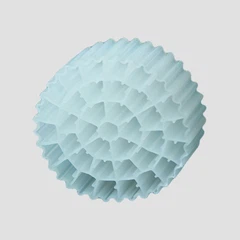
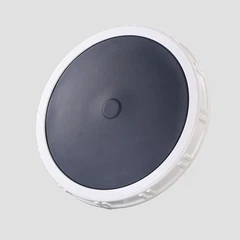
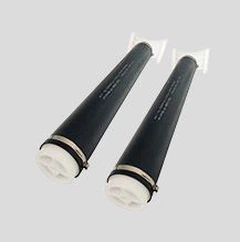

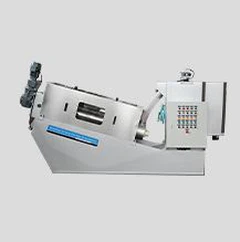



The MBBR process has high flexibility in operation, and various pool types can be used without affecting the processing effect of the process; at the same time, different specific surface area fillers and different filler filling rates can be selected flexibly. When the actual operating water quality or water volume changes, only by increasing the filling rate of the filler, the original design of the biological pool capacity can be guaranteed to achieve the purpose of physical expansion, achieving both efficient treatment and long-term expansion of the treatment scale. There is no need to increase the pool capacity requirements.
Due to the unique mud membrane symbiosis system of the MBBR process, the activated sludge method and the biofilm method can be organically combined, and it has the significant advantages of the mud membrane symbiosis technology. The activated sludge method and the biofilm method are ingeniously combined together.
The main purpose of the system is to use the biofilm method with good low temperature resistance to enhance the removal of organic matter and ammonia nitrogen in the aerobic section, so that their removal rate exceeds the corresponding removal rate of the mixed solution alone.
There are nitrifying bacteria in the biofilm produced in MBBR suspended filler. The exfoliation of the biofilm will inoculate the mixed solution. Compared with the single activated sludge method under the same average cell residence time of suspended solids in the same mixed solution, this biofilm exfoliation and Inoculation will significantly increase the proportion of nitrifying bacteria in the mixed solution. Therefore, the presence of biofilm carriers can help increase the nitrification rate per unit volume of the pool, enhance the nitrification capacity of the secondary treatment process, and further improve the removal efficiency of ammonia nitrogen.