






By: Kate
Email:kate@aquasust.com
Date: April 3rd, 2025
 1. Types of aeration tanks
(1) According to the flow pattern of the mixed liquid in the aeration tank, it can be divided into three types: plug flow, complete mixing and circulating mixing;
(2) According to the aeration method, it can be divided into aeration tank, mechanical aeration tank and a mechanical aeration tank that combines the two;
(3) According to the shape of the aeration tank, it can be divided into four types: rectangular corridor, circular, square and circular runway;
(4) According to the relationship between the aeration tank and the secondary sedimentation tank, it can be divided into two types: combined type (i.e. aeration sedimentation tank) and separate type.
2. Flow pattern of aeration tank
(1) Plug flow aeration tank

Plug flow aeration tank is an aeration tank with plug flow water flow. Generally, the water flows forward in a rectangular pool, and all particles entering the pool stay in the pool for the same time. Since some activated sludge flows back into the pool from the secondary sedimentation tank, some particles may pass through the pool multiple times. The plug flow system with real backflow has better sewage treatment effect, but due to the longitudinal diffusion phenomenon during the water flow, it is difficult to obtain a real plug flow state. The disadvantage is that the impact load resistance is poor. The traditional activated sludge method, stage aeration method, biological adsorption method and other methods in the activated sludge biological treatment process are all plug flow aeration tanks.

(2)Completely mixed aeration tank
The shape of a completely mixed aeration tank can be round, square or rectangular. The aeration equipment can be a surface aerator, which is placed at the center of the surface layer of the tank, and the sewage enters from the bottom center of the tank. After the sewage enters the tank, it is immediately mixed throughout the entire tank under the stirring of the surface aerator to make the water quality uniform. The completely mixed aeration tank can be built separately or together with the sedimentation tank, so it can be divided into separate construction type and combined construction type.

(3) Circulating mixed aeration tank: oxidation ditch, etc.
The circulating mixed aeration tank, also known as the oxidation channel, is a simple activated sludge system and belongs to the delayed aeration method. Its basic form is like a runway. The environmentally friendly bee rotating brush is set on the straight section of the oxidation channel. When the rotating brush rotates, the mixed liquid circulates in the tank, and the flow rate is maintained at more than 0.3m/s, so that the activated sludge is in a suspended state.
The flow type of the oxidation channel is a circular circulating mixing type. The sewage enters from one end of the ring and flows out from the other end. Generally, the circulation volume of the mixed liquid is hundreds of times more than the water inlet volume, which is close to complete mixing. It has several characteristics of a complete mixing aeration tank.
3. Aeration form of aeration tank
The structure of the aeration tank should meet the requirements of aeration, oxygenation and mixing. Therefore, the structure of the aeration tank first depends on the aeration method and the aeration device used.
(1)Blast aeration

Also known as compressed air aeration, it is mainly composed of an aeration fan and a special aerator. Aeration tanks using this method are mostly rectangular concrete tanks, which are divided into several compartments with separate water inlets by partition walls, and each compartment is divided into several corridors.
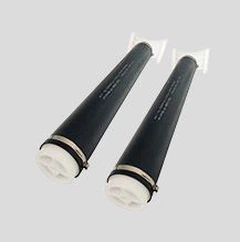
After the sewage enters the tank, it flows in the corridors in sequence and is discharged at the other end. The air is transported to the air diffusion device at the bottom of the tank through a pipeline using an air compressor, and then escapes as bubbles, dissolving oxygen into the water at the gas-liquid interface. There are four different types of diffusion devices: porous tubes, fixed spiral aerators, water ejectors, and microporous diffusion plates.

(2)Mechanical aeration tank
Generally, the mechanical impeller installed in the aeration tank is used to rotate and violently stir the wastewater in the tank, so that the oxygen in the air dissolves into the water. The impeller is installed on the surface of the wastewater in the tank for aeration, which is called surface aeration. This device promotes the continuous circulation of wastewater in the tank through the water lifting effect of the impeller, and constantly renews the gas-liquid contact surface to increase the oxygen absorption. When the impeller rotates, a water jump is formed at the periphery, which can effectively wrap air; negative pressure is generated on the back side of the blade, which can inhale air, so the aeration effect is better. The impeller immersion depth and speed can be adjusted to ensure the best effect. Typical mechanical aeration tanks include circular surface accelerated aeration tanks, standard accelerated aeration tanks, IO accelerated aeration tanks and square accelerated aeration tanks. The two methods of forced aeration and mechanical aeration can sometimes be used in combination to improve the oxygenation capacity, which is suitable for sewage with a high concentration of organic matter.
(3)Jet aeration

Jet aeration is a method of aeration and oxygenation in the aerobic section of sewage treatment. Compared with other aeration methods such as microporous aeration, submersible aeration, and surface aeration, jet aeration is almost never blocked and requires almost no maintenance during its long service life. It can provide constant, stable, and efficient oxygen supply. The jet aeration system consists of three parts: jet aerator, circulating water pump, and blower. The liquid pumped by the circulating pump passes through the main pipeline and the inner nozzle to the mixing chamber, shearing the gas into tiny bubbles to form an oxygen-rich gas-liquid mixture. The turbulent flow of gas and liquid is ejected horizontally through the outer nozzle. The gas-liquid mixture has both horizontal and vertical energy, which produces strong mixing in the pool and carries the surrounding liquid forward. Under the dual effects of horizontal power and vertical gas buoyancy, an overall mixing and circulation is formed.
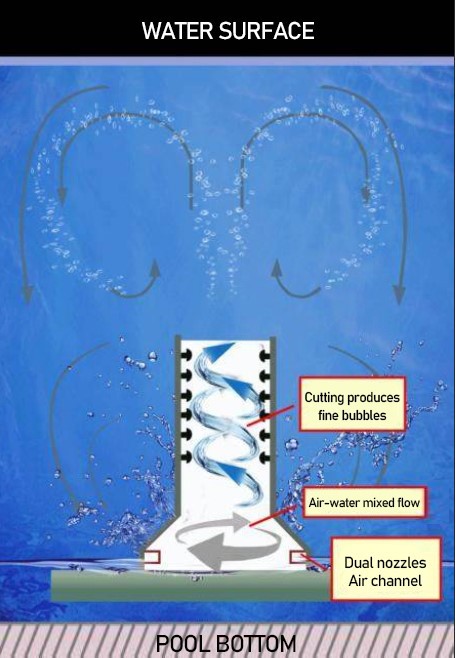
(4)Cyclone aeration
The principle of cyclone aeration is that the airflow is ejected at high speed, mixed with sewage in the cylinder, and then cut by the mushroom head to form tiny bubbles. At the same time, negative pressure is formed below, sucking up the sludge at the bottom of the pool.
Cyclone aerator is a new aeration process that has emerged in recent years. The oxygen utilization rate is tested in 6 meters of clear water at about 18%-23%. Because it can be installed without stopping production, has a service life of more than ten years, is not easy to clog, has stable wind pressure, and has moderate energy consumption, it has begun to be widely used in the field of industrial wastewater in recent years. The cyclone has low wind resistance and stable wind pressure without change, which is more conducive to the operation of the fan, especially air flotation and magnetic levitation. Because it is usually hoisted from the top of the pool and all connected with metal pipes, the cost of the pipes is much higher than the plastic ones for microporous aeration.