






1.Media Filling Stage
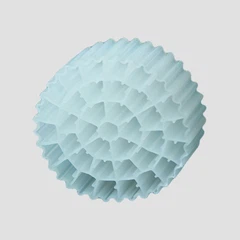
(1)During media feeding,observe for any accumulation phenomena.If accumulation occurs,stop feeding immediately.Resume feeding the next day after re-observation.
(2)Employ intermittent aeration during media feeding.Continuous aeration can be used at night,but the aeration intensity must be reduced.
(3)After 24 hours of operation,introduce continuous influent for 2-3 hours,then continue with the aeration as described above.After 48 hours of operation,observe the biofilm attachment status on the media.Increase the influent flow rate and extend the influent duration.Check the dissolved oxygen(DO)level in the tank,ideally maintaining it around 1.5-2.0 mg/L.After 72 hours of operation,connect to influent and gradually increase it to the design flow rate.Monitor the influent and effluent water quality parameters routinely.It is expected that the design effluent quality requirements will be met in approximately 7 days.

2.Biofilm Cultivation Stage
Biofilm cultivation refers to the process of generating and accumulating a certain amount of microorganisms within the treatment system through specific methods,allowing the biofilm on the media to reach a certain thickness.The main cultivation methods are static cultivation and dynamic cultivation.
(1)Static Cultivation
Static cultivation means:To prevent newly formed microorganisms from being washed away and to maximize the contact time between microorganisms and the media layer,thereby accelerating biofilm formation.In the initial stage,to avoid nutrient deficiency due to single wastewater composition,add nutrient substrates such as urea,diammonium phosphate(DAP),and white sugar once daily at a ratio of C:N:P=100:5:1.First,pump the seed sludge(10%of the effective biochemical volume)and wastewater into the biochemical tank,then initiate aeration for cultivation.The filling volume of media in the biochemical tank should be 35%~40%of the reactor's effective volume.Let it stand without aeration for 4-5 hours to allow attached microorganisms to inoculate onto the media.Then aerate for 1 hour,followed by standing for 2 hours,then aerate for 1 hour.Repeat this cycle.After 4-5 days,the media surface should be fully covered with biofilm.On day 6,begin continuous influent at a low flow rate.

(2)Dynamic Cultivation
After 6 days of static aeration cultivation,a thin layer of yellowish-brown biofilm should have grown on the media surface.Switch to continuous influent for dynamic cultivation.Adjust the influent flow rate and control the dissolved oxygen(DO)between 2~4 mg/L(measure DO with a dissolved oxygen meter).After about 15 days,protozoa such as amoebas and Litonotus(observed with a biological microscope)should appear on the media;the media should feel sticky and slippery to the touch.After 20 days,flagellates,Vorticella,Paramecium,free bacteria and other protozoa emerge.After 20 days of cultivation,metazoa such as rotifers and nematodes appear,indicating that the biofilm has matured.Continuous industrial operation can then commence.

3.Biofilm Acclimation Stage
The purpose of acclimation is to select microorganisms adapted to the actual water quality conditions and eliminate non-useful ones.For treatment processes with nitrogen and phosphorus removal functions,acclimation aims to make nitrifying bacteria,denitrifying bacteria,and phosphorus-accumulating organisms(PAOs)the dominant microbial populations.The specific approach is:First,maintain normal operation of the process.Then,strictly control the process parameters:the average DO should be controlled between 2~3 mg/L,and the aeration time in the aerobic tank should be no less than 5 hours.During this process,measure all water quality indicators and control parameters daily.When the average thickness of the biofilm reaches approximately 0.2-0.5 mm,the biofilm cultivation is considered successful.Continue acclimation until effluent indicators such as BOD₅,SS,and COD<sub>Cr</sub>meet the design requirements.