






Due to the diverse composition of industrial wastewater, treatment systems often require a combination of several methods to achieve the required discharge standards. Wastewater treatment methods are classified into four categories based on the techniques employed: physical, chemical, physicochemical, and biological. Biological treatment utilizes the metabolic processes of microorganisms in the wastewater to decompose biodegradable organic matter. Recognized for its large treatment capacity, cost-effectiveness, and economic reliability, it is the most prevalent water treatment method worldwide.

Application of Aerators in Wastewater Treatment
Biological treatment methods are divided into two major categories based on the oxygen requirements of the microorganisms involved: aerobic and anaerobic. Generally, aerobic methods are more suitable for lower-concentration wastewater, such as effluent from ethylene plants, while anaerobic methods are better suited for sludge and higher-concentration wastewater. Aerobic biological treatment can be further classified into activated sludge processes and biofilm processes.
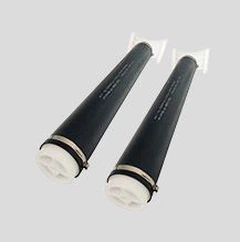
The activated sludge process is an artificial enhancement of natural water purification, relying on activated sludge as the primary agent for removing organic pollutants. The aerobic microorganisms present in the activated sludge require the presence of oxygen to function effectively. Within the aeration tank of a biological wastewater treatment system, oxygen transfer efficiency is positively correlated with the growth rate of aerobic microorganisms. The oxygen supply must be comprehensively determined based on the quantity and physiological characteristics of the aerobic microorganisms, as well as the nature and concentration of the substrate. This ensures the activated sludge operates at its optimal state for organic matter degradation. Experimental results indicate that dissolved oxygen (DO) in the aeration tank should be maintained at 3-4 mg/L. Insufficient oxygen supply leads to poor activated sludge performance and reduced treatment efficiency. To ensure adequate oxygen supply, specialized equipment, such as aerators, is essential.
Principle of Aeration
Aeration is a means of achieving intense contact between air and water. Its objective is to dissolve oxygen from the air into the water or to strip unwanted gases and volatile substances from the water into the air. In other words, it promotes mass transfer between gas and liquid phases. Aeration also serves other critical functions, such as mixing and agitation.

Oxygen transfer from air to water involves mass transfer from the gas phase to the liquid phase. A widely applied theory describing this diffusion process is the two-film theory proposed by Lewis and Whitman. This theory posits that a gas film and a liquid film exist at the gas-water interface. The regions outside these films experience turbulent flow of air and water, respectively. Between the gas and liquid films lies a laminar flow region where convection is absent, creating pressure and concentration gradients under certain conditions. If the oxygen concentration in the liquid film is below the saturation level in the water, oxygen from the air continues to diffuse through the films into the water body. Thus, the liquid and gas films constitute the primary resistance to oxygen transfer. Clearly, the most effective way to overcome the resistance of the liquid film is to rapidly renew the gas-liquid interface.
Aeration achieves this precisely by:
1.Reducing bubble size
2.Increasing bubble quantity
3.Enhancing liquid turbulence
4.Increasing aerator installation depth
5.Prolonging bubble-liquid contact time
Aeration equipment is widely adopted in wastewater treatment based on these principles.