







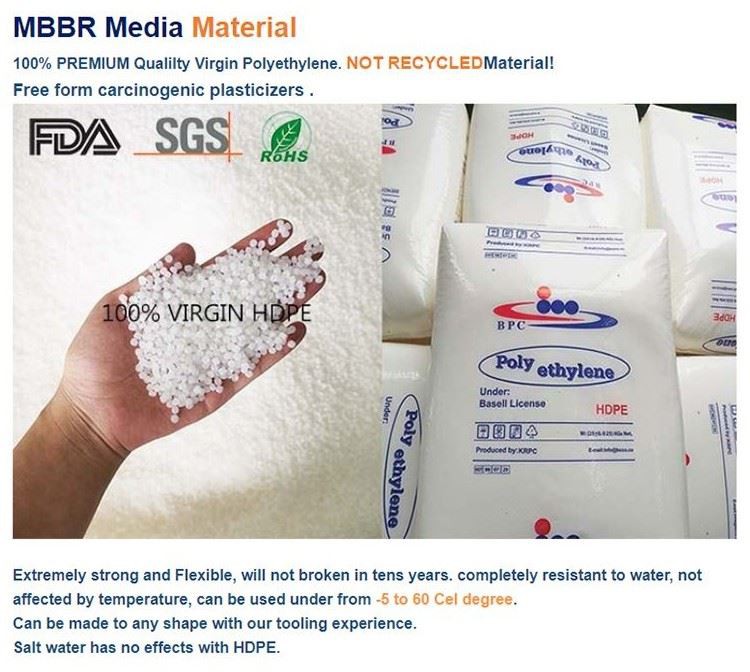
The MBBR BioChip 30 biofilm carrier is completely free
from any phthalates or other plasticizers and does not contain bisphenol A or any other aromatic compounds. It is made of virgin polyethylene (no recycled PE), inorganic fillers, tiny amounts of monoester of glyceric acid (made from coconut fat), citric acid and soda (Na2CO3).
The manufacturing process becomes extremely important when used with applications sensitive to additional harmful chemicals such as aquaculture. Bishpenol A and phthalates have bene known to cause cancer and have hormonal effects.
The parabolic shape of the BioChip 30 allows for a homogenous mixing of the Chips in the tank as well as for the active biofilm being optimally kept in the water flow. Hence, the supply of the microorganisms with substrate and oxygen is ensured at any time and at any load condition.
MBBR technology employs thousands of high-density polyethylene (HDPE) biofilm carriers operating in mixed motion within an aerated wastewater treatment basin. Each individual biofilm carrier increases productivity by providing a protected surface area to support the growth of heterotrophic and autotrophic bacteria within its apertures. It is this high-density population of bacteria that achieves high-rate biodegradation within the system, while also offering process reliability and ease of operation.
system incorporates a biomass carrier into a moving bed fixed-film process that provides a protected, extremely high surface area environment for biofilm growth. The system increases capacity by 200% or more and ensures compliance with ever-tightening permit limits-all within the existing plant footprint.
When the initial COD concentration was increased to 1100–1200 mg O/L. The FR of 20% shows not to be enough to reduce de desired amount of COD, confirming that a higher FR was needed.
Okay. This one is on the engineers. The idea of a fixed-film process is that the biofilm stays in the tank. This is what sets the MBBR biological process apart from traditional activated sludge processes. On occasion, there have been reports of the carrier media getting out of the reactor. Inside an MBBR biofilm reactor, there is supposed to be a sieve screen mounted to the outlet that prevents this from happening. But, if the sieve is not sized correctly (or installed correctly in some cases), the media can slip through. This problem can be avoided entirely if you partner with a good company with competent designers that make sure to double check things like making sure the mesh openings in the sieve aren't bigger than the carriers.


Biological wastewater treatment is very widely used for removal of biodegradable
materials from wastewater. The first course (Part I) of this series, Biological Wastewater
Treatment I – Activated Sludge, starts with a discussion of the biochemical oxygen
demand that is created by biodegradable materials in water and the reason why such
materials must be removed from wastewater. This course (Part II) of this series is about
the Moving Bed Biofilm Reactor (MBBR) wastewater treatment process, including
background information about the process and a description of the process, as well as
process design calculations for several different configurations of the MBBR process and
numerous example calculations.
Hot Tags: mbbr media k1 media mbbr bio filter, China, suppliers, manufacturers, factory, cheap, in stock, free sample, HDPE MBBR Media