





By: Kate
Email:kate@aquasust.com
Date: 25th February 2025

In the field of wastewater treatment, aeration efficiency plays a crucial role in the overall system performance. Disc diffuser, as a key piece of equipment, can significantly improve aeration efficiency while reducing energy consumption. This article will explore the role and advantages of Disc diffuser in enhancing aeration efficiency, helping you better understand how to optimize aeration systems to improve wastewater treatment effectiveness.
1. What Is an Aeration Diffuser?
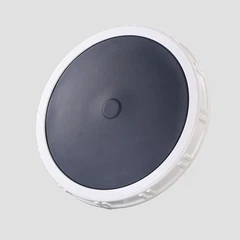
An aeration diffuser is a device designed to uniformly distribute air or oxygen into water in the form of fine bubbles. During wastewater treatment, the primary function of Disc diffuser is to provide sufficient oxygen for microorganisms to break down organic matter. Compared to traditional aeration methods, Disc diffuser offer higher oxygen transfer efficiency, facilitating biological degradation processes in wastewater treatment.
2. The Principle Behind Disc diffuser in Improving Aeration Efficiency
Disc diffuser increase oxygen solubility by generating fine bubbles. Fine bubbles have a larger surface area than larger bubbles, allowing them to dissolve oxygen into the water more efficiently, thus improving oxygen transfer efficiency. Below are the key principles behind how Disc diffuser enhance aeration efficiency:
Fine Bubbles: Disc diffuser generate microbubbles, which have a larger contact surface, allowing for more efficient exchange of oxygen in the water.
Uniform Oxygen Distribution: Unlike traditional aeration methods, Disc diffuser ensure that oxygen is evenly distributed across the entire water body, preventing localized oxygen deficiency or waste.
Enhanced Oxygen Transfer: The design of Disc diffuser allows oxygen to be transferred more quickly through the water, increasing the dissolved oxygen concentration and boosting overall aeration efficiency.
3. Advantages of Disc diffuser
Energy Efficiency: Compared to traditional aeration systems, Disc diffuser consume less energy, effectively reducing electricity usage.
Efficient Oxygen Transfer: Fine bubbles provide a larger surface area for quicker, more efficient oxygen transfer, enhancing aeration efficiency.
Long-Term Stable Operation: Disc diffuser have a long service life and require minimal maintenance, reducing operational costs for wastewater treatment plants.
Reduced Treatment Time: By improving aeration efficiency, Disc diffuser accelerate the degradation of organic matter, shortening treatment times.
4. Applications of Disc diffuser
Disc diffuser are widely used in various wastewater treatment scenarios, particularly in biological treatment and the removal of organic pollutants. They are especially advantageous in the following areas:
Municipal Wastewater Treatment: Disc diffuser effectively increase dissolved oxygen levels, promote the removal of ammonia nitrogen and organic matter, and meet environmental discharge standards.
Industrial Wastewater Treatment: In industrial wastewater treatment with high loads and complex water quality, Disc diffuser can precisely adjust oxygen supply to enhance treatment efficiency.
Aquaculture Wastewater Treatment: Disc diffuser provide stable oxygen supply, ensuring the oxygen demand in aquaculture wastewater treatment, reducing environmental pollution.
5. Conclusion
Disc diffuser play an indispensable role in improving aeration efficiency. They not only enhance oxygen transfer efficiency, supporting microbial growth and organic matter degradation, but also reduce energy consumption and lower operational costs. Therefore, Disc diffuser have become a key component in modern wastewater treatment systems, improving treatment efficiency, saving energy, and reducing maintenance costs.