






By: Kate
Email:kate@aquasust.com
Date: 13th January 2025

After the MBBR process was put into use for a period of time, some MBBR operation problems also appeared in some sewage treatment plants, which also brought new process management difficulties to the operators of the sewage treatment plants. The main operation problems are:
1. Foam problem in the original biological pool. After adding fillers, the problems in the original biological pool have not been completely improved. The problem of biological foam caused by sludge aging due to high concentration still exists, and the problem of biological foam superimposed on the floating of MBBR fillers makes the foam accumulation more complicated.
2. The problem of clogging of the interception net. In order to prevent the fillers from flowing around and causing damage to the equipment in the structure during the sewage treatment process, the interception net must be installed at a reasonable position. The interception net and the water flow direction are arranged vertically, which will cause the fillers and mixed liquid in the biological pool to directly pressure the interception net. In some water plants, the damage of the interception net has caused the MBBR fillers to escape to subsequent structures.
3. The problem of the biofilm effect of MBBR fillers. The rationality of the filler design determines the effect of biofilm inside the filler. The thickness of the biofilm and the detachable film layer determine the formation and maintenance of the biological microenvironment inside the MBBR. The hydraulic conditions in the aeration tank, the effect of plug flow stirring, and the organic matter load of the influent all have a great influence on the biofilm effect of the MBBR filler.
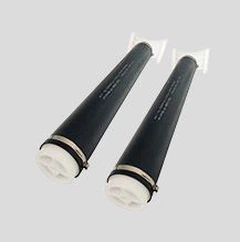
4. Aeration balance problem. After adding MBBR filler to the aeration zone of the biological pool, sufficient stirring power is required to maintain the suspension state of the filler. A large bubble aeration device will be added. This device has different air diffusion resistance from the original microporous aerator, and the specific surface area of large bubbles and micro bubbles is also different, resulting in different oxygen transfer efficiency, causing excessive energy consumption of the aeration aeration equipment. Especially in the case of heavily polluted water, it is difficult to maintain the oxygen-rich environment required for nitrification, resulting in excessive ammonia nitrogen in the effluent.
5. Filler damage problem. After several years of operation, some sewage plants using poor quality MBBR fillers have experienced filler damage problems. Filler fragments began to appear in the secondary sedimentation tank and deep treatment unit, and even entered the sludge treatment section, all of which posed a potential threat to production operations.
6. The water quality improvement effect is not obvious. The original intention of MBBR design is to improve the treated water quality by in-situ upgrading on the basis of the original single activated sludge. However, in the early stage of transformation of most sewage treatment plants, the transformation of the external pipe network was not implemented simultaneously. The influent water quality did not change much before and after the addition of MBBR, and the influent organic load did not change much. The original activated sludge could basically meet the effluent water quality requirements, and the process improvement ability of MBBR filler could not be reflected.
There are more problems in the actual operation of MBBR sewage treatment plants, and more will be collected and sorted out in the future. Among the problems listed above, the focus is on the filler fluidization in the MBBR process and the derived problems.
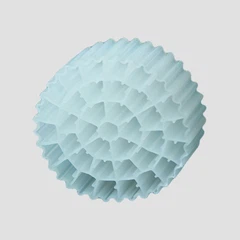
The main feature of the MBBR process is to add a certain proportion of suspended fillers to the biological reaction tank of the sewage treatment plant. These suspended fillers become carriers for microbial fixation. The microorganisms on these carriers increase the biomass and biological species in the aeration tank, thereby improving the treatment efficiency of the aeration tank of the sewage treatment plant. Since the density of the added MBBR filler is close to that of water, it is completely mixed with water during aeration, and the environment for microbial growth is gas, liquid and solid. The collision and shearing action of the carrier in the water makes the bubbles smaller, which improves the utilization rate of oxygen. In addition, there are different biological species inside and outside each carrier, with some anaerobic bacteria or facultative bacteria growing inside and good culture bacteria outside, making each carrier a microreactor, allowing nitrification and denitrification reactions to proceed simultaneously, thereby improving the denitrification effect in the biological pool.