





By: Kate
Email: kate@aquasust.com
Date: 18th Nov 2024
At present, the representative processes in the application of biological treatment of sewage mainly include activated sludge process and biofilm process. Next, based on years of production practice and theoretical study, the two process methods will be analyzed and compared.
Activated sludge process
Process and Principle
A typical activated sludge process consists of an aeration tank, a sedimentation tank, a sludge return system, and a surplus sludge removal system.
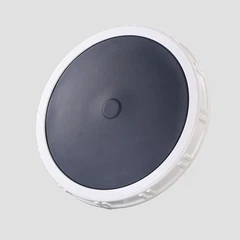
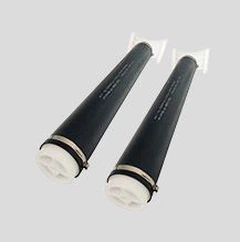
Sewage and the returned activated sludge enter the aeration tank together to form a mixed liquid. Compressed air sent from the air compressor station enters the sewage in the form of small bubbles through the air diffusion device laid at the bottom of the aeration tank, with the aim of increasing the dissolved oxygen content in the sewage and also keeping the mixed liquid in a state of violent agitation and suspended state. Dissolved oxygen, activated sludge, and sewage are fully mixed and contacted with each other, allowing the activated sludge reaction to proceed normally.
In the first stage, organic pollutants in the sewage are adsorbed on the surface of the zoogloea by the activated sludge particles due to their huge surface area and polysaccharide viscous substances. At the same time, some macromolecular organic substances are decomposed into small molecular organic substances under the action of extracellular enzymes of bacteria.
In the second stage, microorganisms absorb these organic substances and oxidize and decompose them under sufficient oxygen conditions to form carbon dioxide and water, part of which is used for their own proliferation and reproduction. The result of the activated sludge reaction is that organic pollutants in the sewage are degraded and removed, the activated sludge itself is proliferated and grown, and the sewage is purified. The mixed liquid after being purified by the activated sludge enters the secondary sedimentation tank, where the suspended activated sludge and other solid substances in the mixed liquid are precipitated and separated from the water. The clarified sewage is discharged as treated water. The sludge concentrated through precipitation is discharged from the bottom of the sedimentation tank, most of which is returned to the aeration tank as inoculation sludge to ensure the suspended solid concentration and microbial concentration in the aeration tank; the proliferated microorganisms are discharged from the system as "surplus sludge". In fact, pollutants are largely transferred from the sewage to these surplus sludge.
The principle of the activated sludge process can beimagely stated as: microorganisms "eat" the organic matter in the sewage, turning the sewage into clean water.Essentially, it is similar to the natural process of self-purification of water bodies, except that through artificial enhancement, the effect of sewage purification is better.

Biofilm process

Biofilm process Process Types.
Wet type: biological filter, biological tower, biological turntable.
Submerged type: contact oxidation, filter material submerged in the filter tank.
Fluidized bed type: biological activated carbon, sand medium suspended and flowing in the tank.
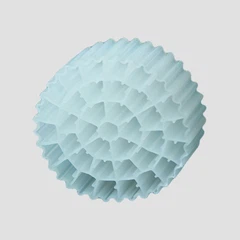
Principle: Because domestic sewage contains a large amount of organic components, the biofilm process relies on the microbial film fixed on the surface of the carrier to degrade the organic matter. Since microbial cells can almost firmly attach, grow, and reproduce on any suitable carrier surface in the water environment, the extracellular polymers extending from the cells cause the microbial cells to form a fibrous entanglement structure. Therefore, the biofilm usually has a porous structure and strong adsorption properties.
The biofilm adheres to the surface of the carrier and is a highly hydrophilic substance. Under the condition of continuous flow of sewage, there is always an attached water layer on the outside of it.
The biofilm is also a highly dense substance of microorganisms. A large number of microorganisms and micro-animals grow and reproduce on the surface and inside of the membrane, forming a food chain composed of organic pollutants → bacteria → protozoa (metazoa).
The biofilm is composed of bacteria, fungi, algae, protozoa, metazoa, and some other visible biological communities. When sewage flows over the surface of the carrier, organic pollutants in the sewage are adsorbed by the microorganisms in the biofilm, and oxygen diffuses into the biofilm. Biodegradation and other effects occur in the membrane to complete the degradation of organic matter.
The surface layer of the biofilm is aerobic and facultative aerobic microorganisms, while the inner layer of the biofilm is often in an anaerobic state. When the biofilm thickens gradually and the thickness of the anaerobic layer exceeds that of the aerobic layer, it will lead to the shedding of the biofilm, and a new biofilm will be regenerated on the surface of the carrier. Through the periodic renewal of the biofilm, the normal operation of the biofilm reactor is maintained.
Renewal and shedding of the biofilm. Maintaining the normal operation of the biofilm reactor is an important part of the renewal and shedding of the biofilm. The surface layer of the biofilm is aerobic and facultative aerobic microorganisms, while the inner layer of the biofilm is often in an anaerobic state. When the biofilm thickens gradually and the thickness of the anaerobic layer exceeds that of the aerobic layer, it will lead to the shedding of the biofilm, and a new biofilm will be regenerated on the surface of the carrier.
The process of renewal and shedding is as follows:
First, the appearance process of the anaerobic membrane:
One is the biofilm;
The second is that the general thickness of the mature biofilm continues to increase, and the inner part where oxygen cannot penetrate will change to an anaerobic state; both are composed of an anaerobic membrane and an aerobic membrane;
The third is that the aerobic membrane is the main place for organic matter degradation, and the general thickness is 2 mm.
Second, the thickening process of the anaerobic membrane:
One is the increase of anaerobic metabolites, which leads to the imbalance between the anaerobic membrane and the aerobic membrane;
The second is the continuous escape of gaseous products, which weakens the adhesion ability of the biofilm on the filler;
The third is to become an aging biofilm, which has poor purification function and is easy to fall off.
Third, the update of the biofilm:
One is the shedding of the aging membrane, and the new biofilm will grow again;
The second is that the purification function of the new biofilm is stronger.
Comparison of activated sludge process and biofilm process
Advantages and disadvantages of activated sludge process.
For a long time, the secondary biological treatment of urban domestic sewage has mostly adopted the activated sludge process, which is currently the most widely used secondary biological treatment process in the world. It has the following characteristics:
First, using the traditional activated sludge process, the capital construction cost, operation cost, energy consumption are often high, the management is more complex, and sludge bulking is prone to occur; the process equipment cannot meet the requirements of high efficiency and low consumption.
Second, with the continuous tightening of sewage discharge standards, higher requirements are placed on the discharge of nutrients such as nitrogen and phosphorus in sewage. Traditional sewage treatment processes with nitrogen and phosphorus removal functions mostly use the activated sludge process, often requiring multiple anaerobic and aerobic reaction tanks to be connected in series to form a multi-stage reaction tank, and increasing the internal circulation to achieve the purpose of nitrogen and phosphorus removal, which is bound to increase the capital investment and energy consumption, and make the operation and management more complex.
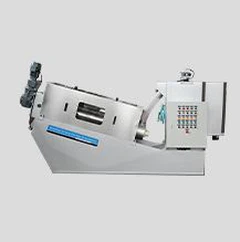
Third, the activated sludge process generates a large amount of surplus sludge, which requires sludge detoxification treatment, increasing the investment.
Advantages and disadvantages of biofilm process.
The biofilm process is also a commonly used method for the secondary biological treatment of urban sewage. Compared with the activated sludge process, it has the following characteristics:
First, the biofilm has strong adaptability to the changes in sewage quality and quantity, and is easy to manage, and sludge bulking will not occur.
Second, microorganisms are fixed on the surface of the carrier, and microorganisms with a longer generation time can also proliferate. The biological phase is more abundant, stable, and generates less surplus sludge.
Third, it can treat low-concentration sewage. In addition, the shortcomings of the biofilm process are that the biofilm carrier increases the investment of the system; the specific surface area of the carrier material is small, the reaction device has limited volume and low space efficiency, and the treatment efficiency is lower than that of the activated sludge process when treating urban sewage; the amount of microorganisms attached to the solid surface is difficult to control, and the operation flexibility is poor; natural ventilation is used for oxygen supply, which is not as sufficient as the activated sludge supply, and anaerobic conditions are prone to occur.