




|
|
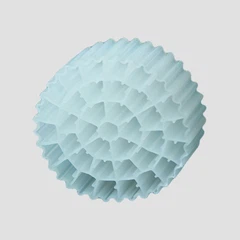
Item No. | MBBR 19 |
|
Diameter* Height |
25 mm* 12mm |
|
|
Surface Area |
> 700 m2/m3 |
|
|
Rooms |
19 rooms |
|
|
Number of units per m3 |
980000pcs |

How the Bio Filter Media For Sale works:
Currently, due to the increasing restrictions on the parameters of wastewater discharge, the charges for both water collection and effluent discharge, and the decreasing availability and quality of water resources, the reuse of wastewater has become an environmentally and economically viable option. In this context, one of the most promising technologies for wastewater treatment and reuse are membrane separation systems and the combination of these systems with other technologies.
Membrane bioreactors (MBRs) consist of a bioreactor combined with a membrane separation process, usually microfiltration or ultrafiltration (UF). In other words, this hybrid system is a biochemical engineering process involving suspension-grown bioreactors for biochemical reactions and porous membranes for the separation of treated water and biomass. There are two types of MBR technologies: external MBRs, in which the membrane modules are placed outside the bioreactor, and submerged MBRs, in which the membrane modules are placed inside the bioreactor.
Among the advantages of MBRs, they are compact and modular systems with low sludge production and complete removal of suspended solids, independent of biomass sedimentation characteristics. They also produce high quality treated wastewater. MBRs have emerged as the wastewater treatment technology that surpasses the traditional activated sludge (ASP) method, and they can be used for municipal and domestic wastewater treatment. Compared to ASP, MBR processes can produce better quality effluent in terms of organic matter, suspended solids and nutrients Since MBR systems have been introduced for biological wastewater treatment, it is important to evaluate their performance in removing heavy metals. Several researchers have found that MBR systems using ultrafiltration membranes to treat wastewater have improved metal removal efficiency compared to conventional activated sludge systems. Wastewater from MBRs can be directly reused for unrestricted irrigation. Disadvantages associated with MBRs include high investment costs and relatively difficult operation and maintenance. Membrane fouling problems require frequent cleaning with chemicals and therefore intermittent operation of the system.
Hot Tags: bio filter media for sale, China, suppliers, manufacturers, factory, cheap, in stock, free sample, Pond Filter Media