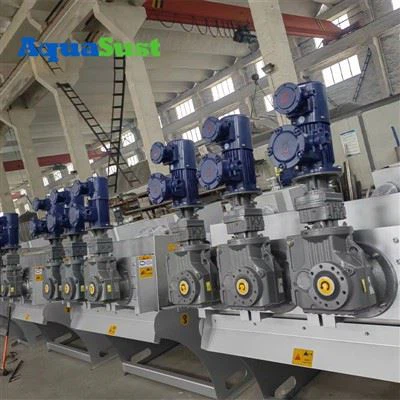



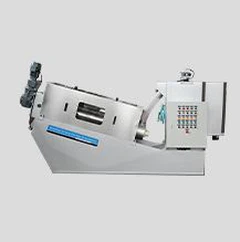



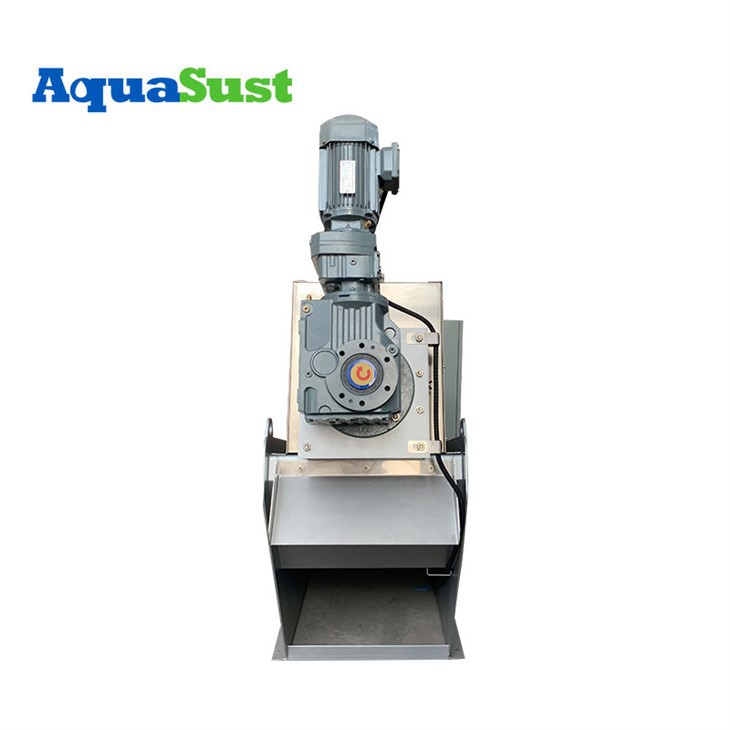


Dewatering screw press small dewatering screw press

What are the wastewater that can be treated by stacked screw machine?
1.Organic wastewater
In the domestic sewage, food processing and paper and other industrial wastewater, containing carbohydrates, proteins, oils and fats, lignin and other organic substances, these substances consume a lot of dissolved oxygen in the water, dissolved oxygen depletion, anaerobic decomposition of organic matter, resulting in hydrogen sulfide, ammonia, and mercaptan and other unpleasant odors, so that the water quality deteriorates further. Microorganisms through pure biochemical treatment, rapid decomposition of various organic matter, basically no sludge discharge, only a small amount of residue back to the front end of the regulator or anaerobic pool.
2. Wastewater with high content of ammonia, nitrogen and phosphorus
The rapid development of petrochemicals, fertilizers and so on, brings a large number of high concentration of ammonia and nitrogen wastewater. At present, the physical and chemical treatment of ammonia wastewater treatment is poor, expensive operation costs, general biological treatment of wastewater containing ammonia and nitrogen requirements are generally not more than 300mg / L, but also serious constraints on the treatment of wastewater. It can directly decompose wastewater with ammonia nitrogen content below 1000mg/L, and the domesticated biological even can treat MSG wastewater with organic ammonia nitrogen below 10,000mg/L.
The main source of phosphorus-containing wastewater is excreta and waste from human activities. Industrial and mining enterprises, synthetic detergents and household cleaning agents, etc., there are different forms of phosphate present.
3. Chemical wastewater
Inorganic chemical wastewater is mainly cooling water in process production, containing acid, alkali and a large number of salts and suspended solids; organic chemical wastewater has a variety of components. Including synthetic dyes, paints and coatings, pharmaceuticals and other processes discharged in the wastewater, with a strong aerobic nature, toxicity, and because most of the organic compounds are synthetic, so the pollution is very strong, not easy to decompose. Compared with a single chemical enterprise wastewater, various chemical wastewaters in the chemical park are mixed and react with each other, which is easier to manage.
4. River and landscape water
For the treatment of river and landscape water, most of the traditional methods use direct placement of microbial agents, or planting aquatic organisms, plants, dredging of the substrate, this method produces a certain, but manpower and material consumption, treatment time is long, easy to recur. After oxygenation and circulation, the sewage can be made clear in a short time. Treatment of rivers and landscape water during April-October, if the following year the water body again produces pollution, the treatment equipment can be turned on again for about a month, without re-investment. Once invested, long-term benefit.
Hot Tags: dewatering screw press small dewatering screw press, China, suppliers, manufacturers, factory, cheap, in stock, free sample