







|
|
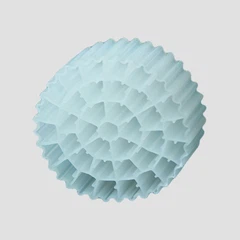
Item No. | MBBR 37 |
|
Diameter* Height |
25 mm* 12mm |
|
|
Surface Area |
> 800 m2/m3 |
|
|
Rooms |
37 rooms |
|
|
Number of units per m3 |
980000pcs |

MBBR Operation Problems
Based on the operational knowledge and comprehensive design experience of the MBBR process, there are several problems that may be encountered in a full-scale MBBR process, such as clogging of the feed tube/discharge screen, non-uniform mixing, clogging of the carrier void, carrier destruction, carrier build-up on the discharge screen, and carrier overflow from the reactor. These can be prevented by skilled design, based on accumulated project knowledge and operational experience.
Depending on the characteristics of the wastewater, problems such as chemical scaling on the carriers may occur, especially for wastewaters containing high levels of calcium, ammonia and other minerals, such as waste streams from anaerobic digestion and diary wastewater. Mineral precipitation can occur when the wastewater is oversaturated with the relevant ion concentration. The composition of mineral scaling varies and may contain garnet, hematite, hydroxyapatite, magnetite, etc. Scaling on biofilm carriers negatively affects reactor performance because it reduces the effective surface area, hinders mass transfer, and requires more energy to keep the carriers in suspension. Carriers that scale excessively become heavier and settle down at the bottom of the reactor, requiring replacement. pH and ion concentration are the main factors affecting chemical precipitates on the carriers. Minerals tend to precipitate more at higher pH; therefore, pH control can mitigate fouling. Buffer additions, reduction of airborne CO2 stripping and alkalinity removal can help hinder fouling rates. Oxyfuel aeration is an option to avoid air stripping of carbon dioxide to avoid pH rise. Pretreatment by chemical precipitation, such as the addition of lime to remove calcium and magnesium, is also an option.
Changes in the composition of the feed wastewater can cause disturbances, such as increased organic loading during nitrification or ammonia oxidation, which will lead to a shift in competition between heterotrophic and autotrophic bacteria. In this case, heterotrophic bacteria with higher growth rates can gradually dominate the MBBR biofilm, leading to unfavorable conditions for ammonia removal.
Unnecessary biofilm shedding caused by toxic chemicals or sudden changes in operating conditions (e.g. sudden increase in aeration) can lead to process problems and even failure in extreme cases, but the inner layer of the biofilm is protected by an outer layer that makes the biofilm quite resilient to such disturbances.
Hot Tags: filter media, China, suppliers, manufacturers, factory, cheap, in stock, free sample, EPDM fine bubble disc diffuser, K3 MBBR Media, MBBR Design, Lamella Plate Media, K1 Filter Media, HDPE MBBR Media


